What to Expect
At Your Appointment
Your First Appointment
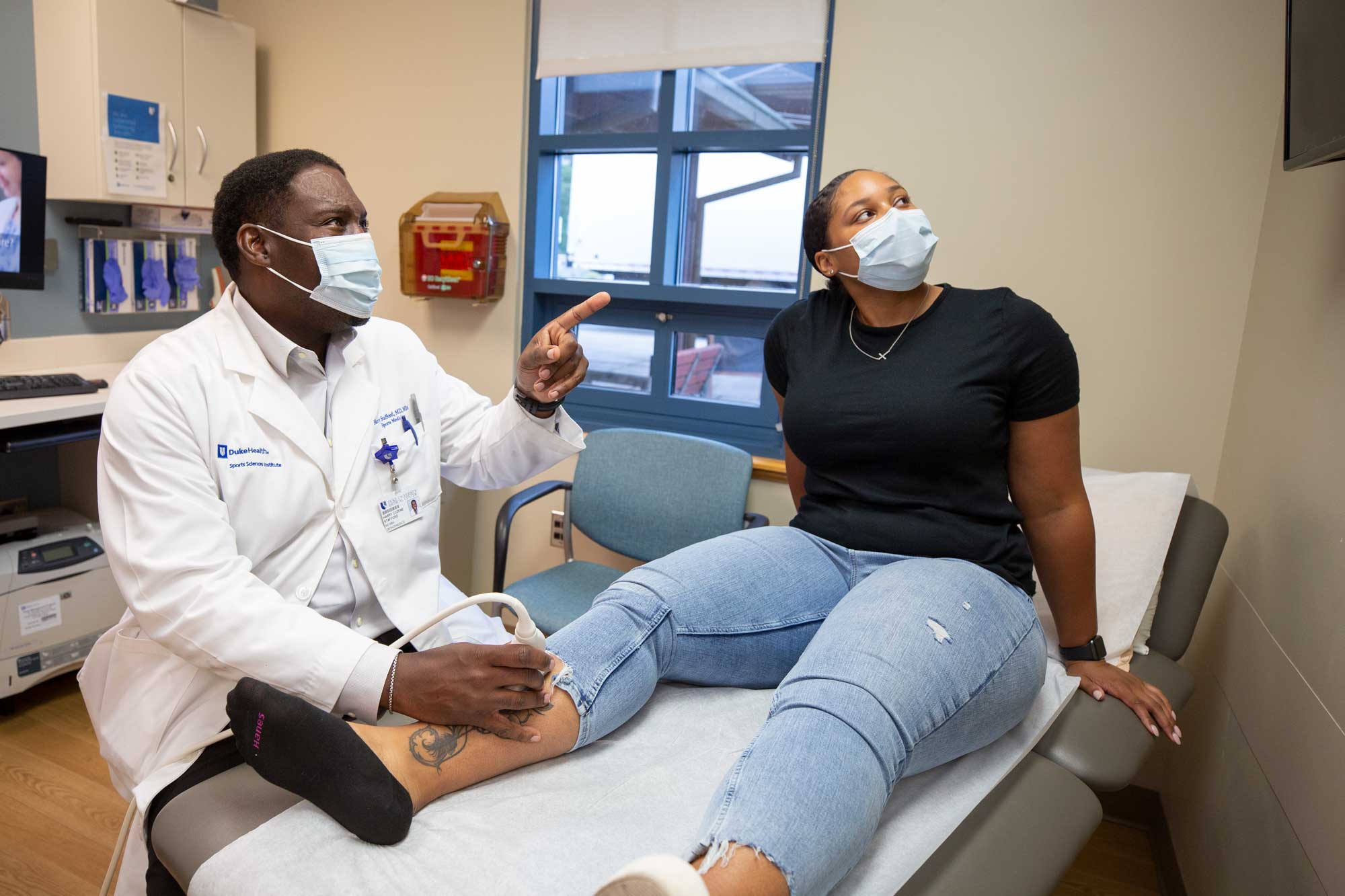
Your first appointment may begin with a nurse, nurse practitioner, or physician assistant. They will review your health history and may ask additional questions. Next, you will undergo any required lab tests and imaging studies. We may use X-rays, fluoroscopy, stress radiography, ultrasound, MRI, or CT scans to diagnose your injury or condition and recommend the most effective treatment.
You will then be seen by one or more doctors who will discuss your diagnosis, treatment options, and next steps. Nonsurgical treatments are often our first recommendation. These may include bracing, anti-inflammatory medications, physical therapy, and ultrasound-guided injections of corticosteroids.
Subsequent Appointments
Depending on your goals, injury, and treatment plan, you may have follow-up appointments. These may include visits with a physical therapist, orthopaedic surgeon, dietitian, or others.
Surgery
If nonsurgical measures aren’t enough to resolve your pain or injury, we offer the full spectrum of orthopaedic procedures, including surgery. Outpatient surgery takes place at Duke Ambulatory Surgery Center Arringdon or one of our other ambulatory surgery centers. If you require an overnight stay, your surgery will be scheduled for Duke University Hospital or Duke Regional Hospital.
Your Care Team
During your visits, you will meet with a variety of people involved in your care. Depending on your health condition, these may include some or all of the following:
Orthopaedic Physician Assistants and Nurse Practitioners
They are often the first medical professional you will see and will direct you to the most appropriate provider for your care. They are specially trained in joint and bone pain and injuries and work closely with orthopaedic surgeons. They perform exams, interpret your results, prescribe medication, and assist in orthopaedic surgery.
Sports Medicine Doctors
These doctors diagnose and provide nonsurgical treatment for activity-related injuries. They may also have additional training in concussions, exercise-induced asthma, overtraining and fatigue, nutrition, and other areas.
Orthopaedic Surgeons
They perform general orthopaedic surgery and often specialize in a particular joint, such as the hip, knee, shoulder, ankle, and wrist. Our orthopaedic surgeons undergo additional training in sports medicine, trauma, joint replacement surgery, pediatrics, or another area.
Radiologists
Your radiologist uses advanced imaging technologies to diagnose musculoskeletal injuries. They coordinate care with your doctor or orthopaedic surgeon to determine the best treatment and care for you.
Physical Therapists
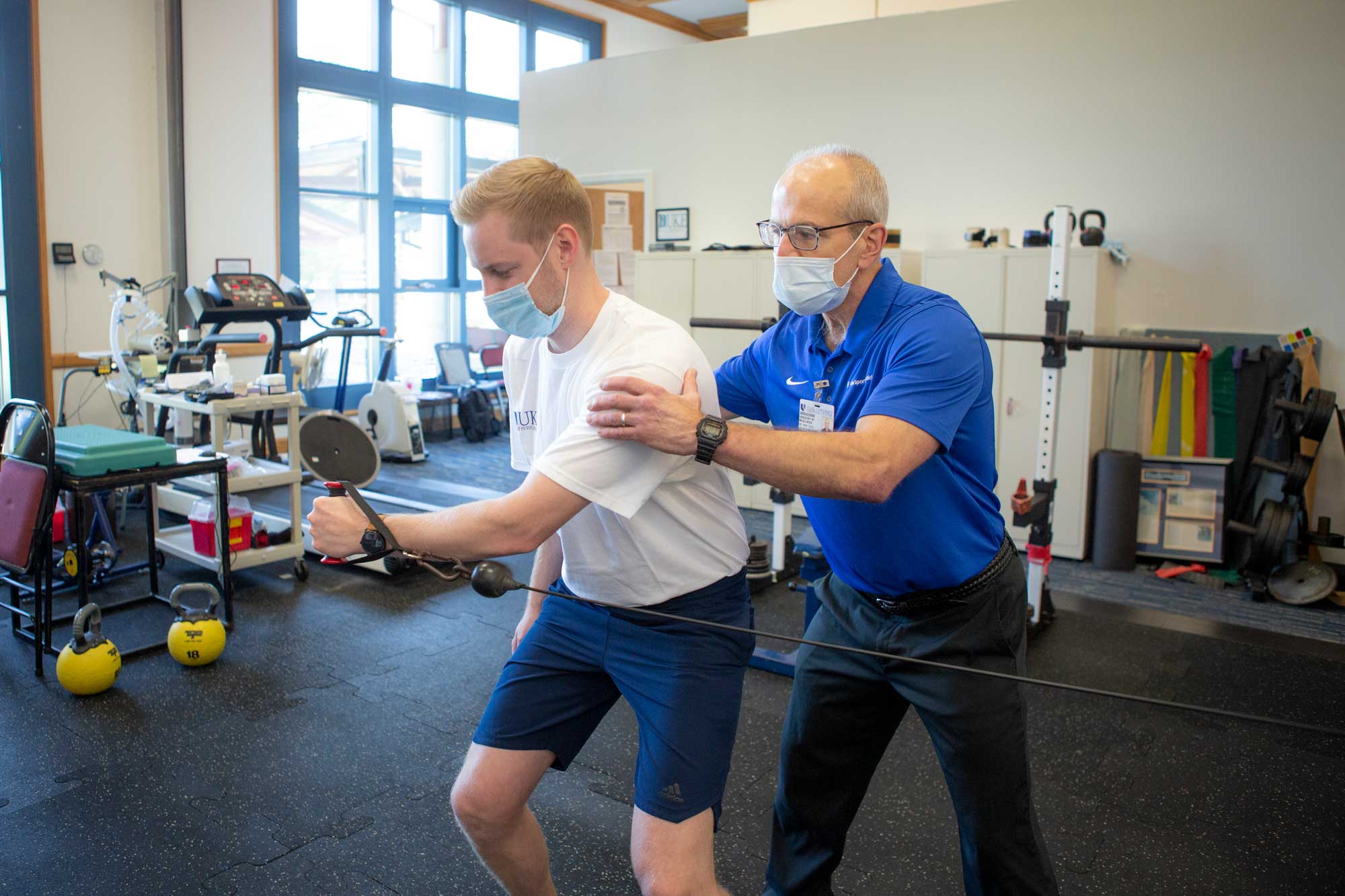
Our physical therapists provide you with exercises and other tools that help you improve your mobility, minimize your pain, and restore function.
Sports Performance Specialists
Our fitness professionals assess your current fitness level and identify your specific goals -- and work with you to achieve them.