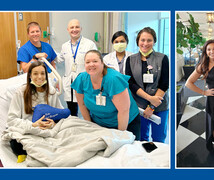
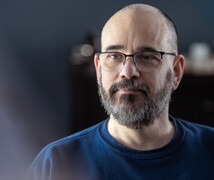
In September 2025, Louisiana sheriff’s deputy Nick Lege was suffering from heart failure and liver damage when he arrived via medical flight to Duke University Hospital. Two months later, Lege underwent a combined heart-liver transplant, which is only offered at a few hospitals in the Southeast. Today, 46-year-old Lege credits Duke for saving his life. “I am so grateful for the opportunity to go to Duke and get this kind of high-class care,” Lege said. “It means so much to me.”
Genetic Testing Reveals Surprising Diagnosis
In 2016, Nick Lege learned that months of fatigue, breathlessness, and weakness were due to heart failure. His condition worsened a few years later when he started experiencing dangerous arrhythmias and received an implantable cardioverter defibrillator (ICD) to keep his heart rhythm in check.
In July 2024, after a severe bout of arrhythmias and ICD shocks, genetic testing showed a mutation in a gene called lamin A/C (LMNA) that had caused Lege to develop a rare and severe form of cardiomyopathy (disease of the heart muscle). His heart problems had also led to liver damage. Lege needed transplants for both organs, but his local hospital wasn’t comfortable performing such a complex surgery (fewer than 100 combination heart-liver transplants were done in the U.S. in all of 2025). Lege needed to transfer to a more advanced hospital.
Choosing Duke for Transplant Care
After narrowing it down to a few of the country’s top transplant centers, Lege and his wife chose Duke Health. Lege’s condition was so poor that he had to fly on an air ambulance to Durham. Lege’s Duke care team worked together to stabilize him, help him get healthy enough for transplantation, and determine whether a liver transplant in addition to a heart transplant was truly his best option.
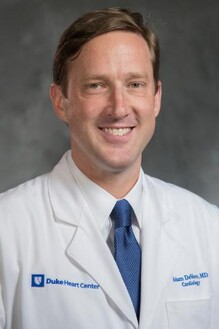
“If we did a heart transplant alone, the liver may not tolerate it, and he could have a poor outcome,” said transplant cardiologist Adam DeVore, MD. “On the other hand, undergoing two organ transplants is incredibly taxing on the body and increases the risk of post-operative complications. It’s a difficult decision that’s different for every single patient.”
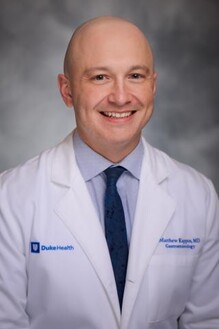
According to transplant hepatologist Matthew Kappus, MD, there are many factors to consider. “We’re evaluating your medical history, how long you’ve lived with your condition, whether you have additional risk factors for liver disease -- plus the information that we get from blood work, cross-sectional imaging, and, in many cases, liver biopsy.”
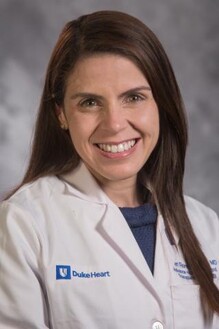
Karen Flores Rosario, MD, is a transplant cardiologist who specializes in treating genetic cardiomyopathies like Lege’s. She facilitates a Duke clinic that provides genetic testing and genetic counseling for these patients and their families, since the condition can be passed down to children. “Ultimately, when we discussed his case in our multidisciplinary conference, we concluded that in order for Mr. Lege’s heart transplant to be successful, a liver transplant was also needed,” she said.
Since Transplant Surgery, Looking to the Future
Lege’s transplant surgery took place in early November 2025, and he left the hospital about a month later. Since temperatures had turned cold, his nurses rallied together to purchase some warm clothes for him to leave in. “That’s above and beyond to me,” Lege said.
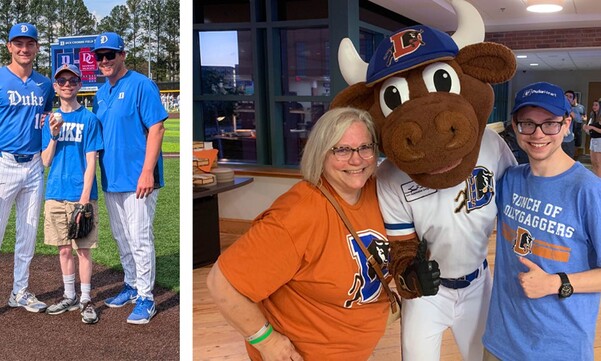
Lege must stay in North Carolina for a while in case any problems arise and so he can attend follow-up appointments, but he’s hoping to head back to Louisiana this summer. In the meantime, he’s gaining strength and grateful to be spending time with his wife and son.
“I used to worry whether I was ever going to be able to do anything with my son again,” Lege said. “I was nervous I wasn't going to live long enough to see him graduate high school or get married one day, but now I have that opportunity.”
Duke Offers Highly Specialized Care
Duke is uniquely equipped to manage complicated cases like Lege’s, whose care team included experts in cardiology, electrophysiology, hepatology, transplantation, critical care, and more. “Multi-organ transplantation is not common,” Dr. Flores Rosario said. “Not only do you need to have surgeons who are comfortable doing this type of operation, but you also need a skilled medical team that can support the patient before and after, because it really takes a village to make something like this happen.”