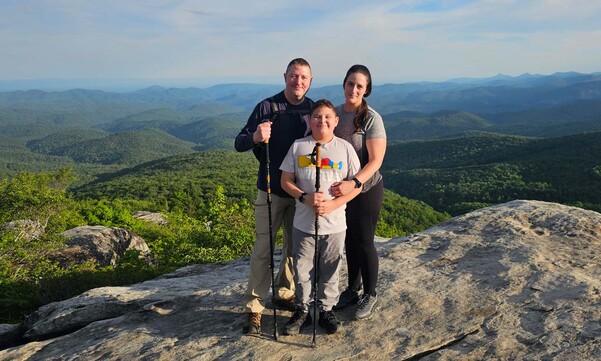
Emily DePetris was diagnosed with liver disease over a decade ago. In 2024, she underwent a liver transplant at Duke Health and is amazed at how good she feels now. These days, DePetris helps families make decisions about organ donation when their loved ones are at the end of life. “There isn’t a day that I don’t push myself to do better, be better, because I was given this amazing second chance at life,” she said.
From Diagnosis to Decline
Back in 2014, Emily DePetris’s skin was so itchy that she couldn’t sleep for days. She was diagnosed at Duke with primary biliary cirrhosis, an auto-immune disease that destroys small bile ducts in the liver. There is no cure for primary biliary cirrhosis, which causes inflammation, scarring, and eventually, liver damage. “Transplant was mentioned,” said DePetris, now 36, “but in a ‘if things eventually get to that point’ kind of way.”
Medication helped alleviate DePetris’s symptoms for a while. But in 2023, things took a turn for the worse. “The day after I got back from my honeymoon, my legs were really swollen,” said DePetris, who lives in Raleigh. “My liver enzymes kept creeping up, and I started getting really jaundiced and lethargic.”
DePetris was put on the waitlist for a liver in July of 2024. Friends and family offered to donate part of their livers, “so much so that the transplant coordinators let my family know they had received an overwhelming response and we needed to pause on getting the word out,” laughed DePetris, but by that point, her doctors determined that she was too sick for a living donor.
Time for Liver Transplant
Three weeks later, she got the call. “It was 9:30 in the morning, and they said, ‘You are eligible for this offer. Go about your day as normally as possible, and we’ll call you tonight,’" said DePetris. “It was a crazy day! My mom and dad came into town, and they called at 10 pm and said it was a go.”
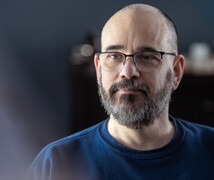
On August 8, Duke liver transplant surgeon Kadiyala V. Ravindra, MBBS, transplanted DePetris’s liver. “Liver transplant is always complicated, but we have a conference every week where we make a plan for each case,” explained Dr. Ravindra. “The surgeons are there, transplant coordinators, liver specialists, pharmacists, social workers—the entire team. Fortunately, Emily was not as sick as some of the patients we see, who may not have the reserves that a young person like her has.”
“Dr. Ravindra is just the best,” said DePetris. “I stayed in the hospital for a week after my transplant, and he came every day. He was always so encouraging and supportive.”
Rocky Road to Recovery
“Unfortunately, we weren't even home 24 hours before I was readmitted with fever and pain,” said DePetris. “A few days later, I needed to have a stent placed in my bile tract. Then I got pancreatitis. This was the most challenging part post-transplant, from the pain to the swelling. I remember thinking I would never get better. I am fortunate to say that after 15 days of being admitted, I was discharged.”
Once home, the hard work of rehab began. “My mom is a physical therapist, which is a blessing and a curse because I was always being told to walk,” laughed DePetris. “But even right after the transplant, I felt a million times better. I had no idea that this was how everyone else feels, because I had been sick for so long.”
“A Wild Feeling”

DePetris remembers a trip to the beach she took with her husband about two-and-a-half months after her transplant. “We just went for the day,” she said, “but I couldn’t believe how good I felt. It was so nice to go somewhere where people didn’t know I was the girl who had a transplant.”
Dr. Ravindra approved. “That's the whole point of treating somebody and getting them back to health,” he said. “If they can’t do what they want to do, then we haven’t provided a complete solution.” DePetris’s future with her liver looks bright, too. “People go on to live for decades after liver transplant,” he said.
“Now that I'm over a year out, it's a wild feeling to be post-transplant,” said DePetris. She enjoys spending time with her dog, Beau -- “He’s always been such a big supporter and a source of joy for me” -- needlepoint, and watching football with her husband. And while she has long worked in health care, she’s pivoted to something especially close to her heart.
Helping Families Make Decisions
“In May of 2025, I started working as a family support coordinator at a local organ procurement agency called HonorBridge,” she said. “My role is to provide compassionate presence during end-of-life moments, presenting organ donation as an opportunity to honor a loved one and advocating for patients in need.”
“The few times that I've been able to share with a family that I'm a recipient, it seems to make a big impact,” said DePetris. “That reinforces that this is what I want to be doing. Every ‘yes’ that I get helps someone on the transplant waiting list and helps all the others who get to move up on the list.”