Child Life
Announcements
Please review our visitor guidelines before visiting this location. Keeping everyone safe is our top priority. We appreciate your support of our efforts.
The Child and Adolescent Life team strives to make every child’s health care experience a positive one. We believe all children have the right to understand what is happening to them, be supported by their caregivers and staff, and have opportunities for play, especially in new or unfamiliar medical environments.
The Child and Adolescent Life staff are professionals trained in child development, special education and family-centered care. Child life specialists promote effective coping through play, preparation, education, and self-expressive activities. They provide procedural and emotional support for families and encourage opportunities for optimal development of children facing a broad range of challenging experiences, particularly those related to health care and hospitalization.
Music Therapy
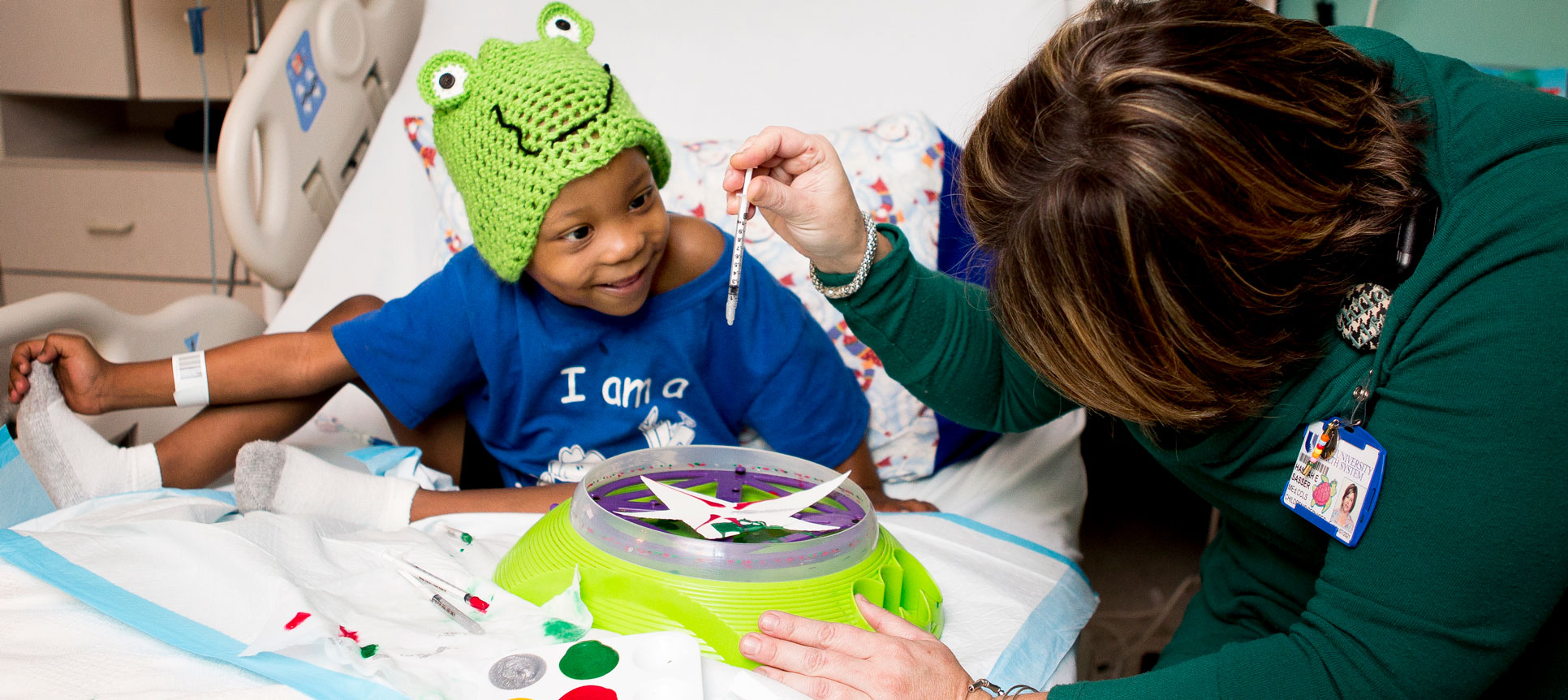
Duke contracts with a board-certified music therapist to use evidence-based music interventions that address the physical, cognitive, emotional and social needs of children and families affected by illness or hospitalization. Like other allied health professions such as occupational therapy and physical therapy, this health service has been shown to be an effective mode of treatment for children with a wide range of diagnoses.
The natural affinity that all people have for music makes it a powerful medium for treatment. Music's familiarity and predictability can encourage responses in patients who resist other interventions. Music therapy participation can enhance a child’s sense of control, increase self-expression and self-esteem and encourage social interaction even as it meets the medical goals specific to treatment.
Music therapy goals may include:
- Pain/anxiety management
- Normalization of medical environments
- Socialization
- Legacy building or memory building
- Developmental support
- Sensory stimulation
- Family support
- Self-expression and awareness
- Support of physical rehabilitation
Music therapy intervention techniques may include:
- Song writing
- Instrument improvisation
- Movement to music
- Singing
- Interactive music making
- Parent-child interactions
If you or your child is interested in learning more about music therapy at Duke Children’s Hospital, please contact your Child Life specialist or health care provider.
Music therapy at Duke Children’s Hospital is supported by generous grant money and foundation support.
Play, Support, and Education
Therapeutic Play and Psychosocial Support
Child Life specialists use play that is developmentally age appropriate and supportive to better meet the emotional needs of children. Therapeutic play, including music therapy, can help decrease pain, meet treatment goals, teach positive coping skills for future procedures or tests, and promote mastery of experiences.
Medical Play
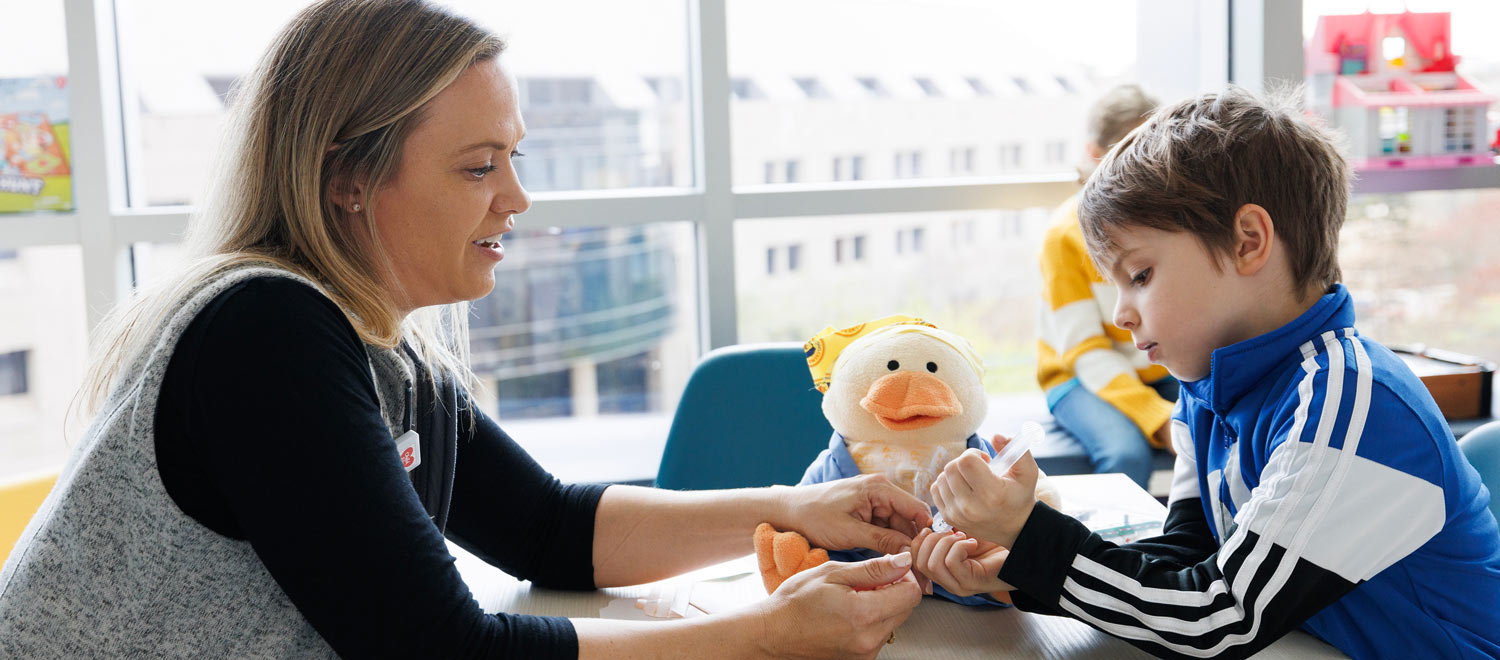
This hands-on play experience uses real or imaginary medical equipment and supplies to help children become more comfortable and familiar with health care experiences. Medical play provides the opportunity for children to work through their feelings and fears surrounding health care events, and enables specialists to clarify any misconceptions children may have about their care, treatment, or procedures.
Family Support and Education
Child Life specialists provide emotional support and information to parents related to helping their child or adolescent cope with illness or hospitalization. Specialists identify how a parent may best support their child within the hospital and when they return home. Brothers and sisters can also be affected by a child’s illness or injury. Siblings may need help understanding what is happening and how to work through their own feelings and concerns about a brother or sister who is sick. Child Life specialists work with the entire family to give support, answer questions, and help prepare siblings for visiting the hospital, returning home, or reentering school. If you have concerns regarding your hospitalized child or questions about how to best support siblings during hospital visitation, please email us at childlife@duke.edu.
Grief and Bereavement Education and Support
Child Life specialists provide sibling and family resources for grief, help support patients through transitioning care, and help facilitate legacy building activities. You can ask your Child Life specialist about making handprints or footprints for your child, making referrals to other available resources, or facilitating sibling visitation.

Pre-op Teaching and Tours
Child Life specialists address children's fears and concerns about surgery, procedures, or general anesthesia. They are available by phone, email, or in person during clinic visits, pre-op screening sessions, and on the day of surgery. The pre-op visit consists of a tour of the outpatient surgical area, a hands-on medical play session, and education about medical equipment to help prepare patients and their families for what to expect and to facilitate coping. Child life specialists work with the entire family to help both the patient and their siblings feel more relaxed and in control throughout the medical experience.
Preparing for Procedure
Child Life specialists can help to lessen pain and anxiety for children and adolescents during medical procedures, tests, and surgeries by providing appropriate teaching and emotional support. Specialists model and teach positive coping strategies and techniques such as guided imagery, comfort positioning, distraction, and relaxation exercises to best meet your child’s individual needs. Using developmentally appropriate tools. language specialists can increase a child’s understanding and help assist parents in supporting their child during future medical procedures more effectively.
- Download the My Surgery at Duke Children's Hospital Coloring Book (PDF, 2.1 MB)
If you have concerns regarding your child or questions about an upcoming surgery or procedure, please email us at child_life_surgery@duke.edu.
Learn about surgery at Duke Children's Hospital.
How You Can Help
The Duke Child and Adolescent Life Program is free for all patients and families. Your donation, community funding, and support are greatly appreciated, and help us continue to provide our nationally recognized status, playroom programming, interventions, and support services.
All donations to the child life program ensure that pediatric patients and families continue to receive the best services available as Duke continues to grow and expand.
The Child Life Program frequently needs and uses the following items for children and families:
- Lightweight infant rattles
- Fisher-Price medical kits
- Lego sets
- Uno cards
- Strands of colorful string for bracelet making
- 12-count color pencils
- Small sound machines
Infant, toddler, and adolescent items are always in high demand.
For additional information, please email: childlifedonations@duke.edu.
Learn more about Donations Frequently Asked Questions (FAQs).
For more information about special visitors or other ways to support the Child Life and Adolescent Program, please email childlife@duke.edu.
Student Internship and Practicum Programs
Duke’s Child and Adolescent Life Program accepts university-affiliated undergraduate and master's level candidates for both practicum and internship positions.