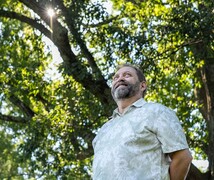
Over the course of a year, Charles Stanley, 77, had skin cancer three times near his eye, where it is tricky to remove, and even more difficult to reconstruct the resultant wound. Following oculoplastic reconstructive surgery at Duke Health, “most people that glance at me can’t even tell that I’ve had surgery,” said Stanley. “Duke has been excellent in every aspect of my care. I wouldn’t go anywhere else.”
The MOHS Procedure
In October 2023, Charles Stanley was diagnosed with skin cancer on the inside corner of his left eye. A surgeon near his home in Morehead City performed a MOHS procedure, in which the surgeon scrapes away a very thin layer of cancerous skin tissue and examines it under a microscope to see if any cancerous cells remain at the edges. The surgeon repeats the procedure until no more cancer cells are found. Once the cancer has been fully removed, the wound is repaired.
A Challenging Reconstructive Surgery
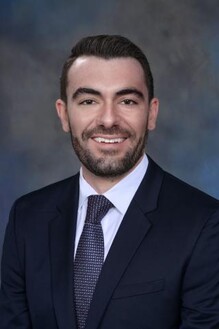
“While most MOHS surgeons perform their own reconstructions, when the wound is next to the eye, it can be much more challenging,” explained Duke oculofacial plastic surgeon Christopher Dermarkarian, MD. “It’s difficult to plan, because you don’t know the exact size and location of the wound until after the MOHS surgery. You also have to consider the patient’s facial structures and the quality of the skin. Due to the location and size of Mr. Stanley’s wound, he was referred to us for reconstructive surgery.”
Dr. Dermarkarian performed the surgery the next day, and it was a success. “We borrowed some skin and muscle from the forehead, and rotated it to cover the wound,” said Dr. Dermarkarian.
A Good Catch and Follow-Up Procedures
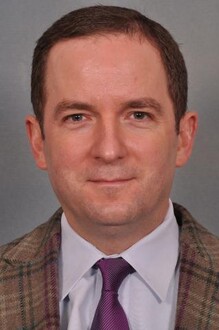
“Anytime I perform surgery, I look over the whole area to be sure I’m not missing anything,” said Dr. Dermarkarian. “During Mr. Stanley’s initial visits, I found a suspicious area between his eye and ear, and suggested he get it checked out by his dermatologist.” The spot was biopsied, and came back positive for cancer. This time, Stanley elected to have both the MOHS surgery and the reconstruction done at Duke Hospital. In January 2024, the MOHS surgery was performed by MOHS surgeon Jonathan L. Cook, MD and the reconstruction was performed by Dr. Dermarkarian.
“This one was even more extreme,” said Stanley. “The wound was close to an inch. Dr. Dermarkarian had to cut down the side of my face, and move tissue over from there.” Dr. Dermarkarian followed up the surgery with a series of injections of a special medication that would reduce scarring, and additional procedures that helped cosmetically and opened his eye up a bit more so that Stanley could see better.
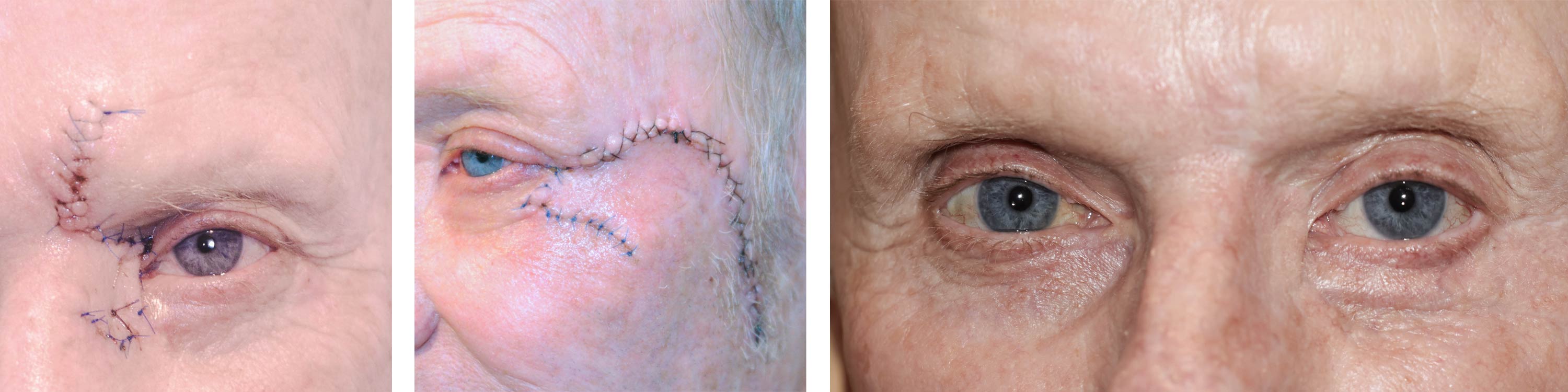
From left: Roughly one week after first surgery, roughly one week after second surgery, and six months after multiple reconstructive surgeries
Another Solution
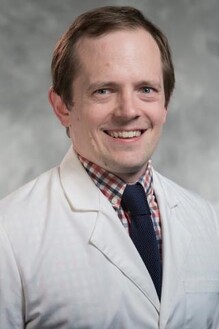
In July 2024, “Mr. Stanley came back to me with another cancer on his eyelid,” said Dr. Dermarkarian. “At this point, he was tired of having so many surgeries and was looking for a non-surgical option.” Dr. Dermarkarian connected Stanley to Duke MOHS surgeon Christopher Stamey, MD, who prescribed a topical chemotherapy drug to treat the cancer. “It’s nice to have these amazing clinicians in your corner to give patients the best options and the best outcomes,” said Dr. Dermarkarian, noting that Stanley’s cancer responded well to the topical treatment.
“I've been totally pleased with Dr. Dermarkarian,” said Stanley. “Anytime you get facial surgery, you’re terrified, because you don’t know how it will look. But I’m so happy with how it turned out.”
“Our goal is to give you not only the best functional outcome, but also the best cosmetic outcome,” said Dr. Dermarkarian. “And we use all the tricks that we have to get there.”