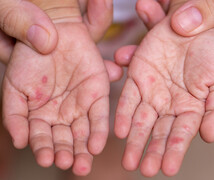
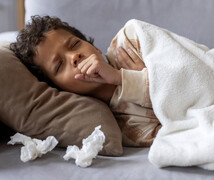
Measles cases and exposure have been reported at several locations in the Triangle. It’s important that you check your measles vaccination status to ensure it is up to date.
Measles is a highly contagious virus that spreads through the air when an infected person coughs, sneezes, or breathes. If you were in a location with someone known to have measles, you may have been exposed, and you may be contagious before symptoms appear.
While there have been no cases of measles reported at any Duke Health locations, Duke Infection Prevention is doing everything it can to monitor the situation and minimize the public health risk. Here, Ibukun C. Kalu, MD, a specialist in pediatric infectious disease at Duke Health, answers frequently asked questions.
I’m concerned about the measles cases in the area. What should I do to protect myself and my family?
Make sure your vaccines are up to date. If you and your family members have received two doses of the Measles, Mumps, and Rubella (MMR) vaccine, you are protected. If you’ve had one dose of the MMR vaccine, contact your provider to request the second vaccine dose.
If you haven’t been exposed or vaccinated, get the vaccine now. Vaccines are available through your doctor and at many local pharmacies.
If you think you’ve been exposed but have never been vaccinated, contact your provider immediately. It’s important to get the vaccine within 3 days of being exposed. This may prevent you from getting measles.
What if I’m not sure if or when I was vaccinated against the measles?
If you were born before 1957 and were vaccinated, it's likely that you are protected. If you were born between 1957 and 1971, the vaccine you received may not have been as reliable. Ask your doctor if you've been properly vaccinated. Check your immunity status.
I was in a location where there was a confirmed case of measles. What should I do?
Contact your provider immediately and tell them about your concern. They will take the appropriate precautions. Exposure can occur without being close to the individual. Symptoms, including fever, cough, red or watery eyes, or a rash, can take up to two weeks to appear.
What should I do if I have symptoms?
Contact your provider immediately and tell them what you are experiencing. Do not walk into your doctor’s office, an emergency room, or urgent care without notifying them, as the disease is highly contagious. Call ahead and let them know why you want to be seen. Your provider may see you virtually or in person to triage you appropriately and recommend next steps.
I am immunocompromised. How can I protect myself?
If you are immunocompromised and cannot receive the MMR vaccine, ensure everyone around you is fully vaccinated and avoid public or crowded areas.
If you think you’ve been exposed to measles, contact your provider immediately. Because you are at high risk, you may receive immunoglobulin, antibodies to the measles virus. It should be given within 6 days of being exposed. This may prevent or lessen the severity of measles.
Where can I get more information?
The North Carolina Department of Health and Human Services has extensive information on measles, local exposures, and more.
Pediatric infectious diseases specialist Dr. Ibukun Kalu answers some of the most common questions from families about protecting children from measles.