Hours after Grace Ray was born, routine testing flagged major cardiac problems. While Grace’s heart valves were healthy, her heart muscle was not. She underwent a heart transplant at Duke University Hospital, and during the procedure, her healthy heart valves were removed and given to another baby born with congenital heart disease. Duke surgeons pioneered this process, called a “partial heart transplant” or living heart valve replacement. Duke is one of the few hospitals in the country with the expertise to save two lives with one donated heart.
A Picturesque Moment Turns Worrisome
In February 2025, Raleigh residents Rhian and Riley Ray happily welcomed their second daughter. Grace looked healthy, but low oxygen levels and a heart murmur caused serious concern. Imaging tests showed Grace had an enlarged heart that wasn’t pumping well.
Staying Healthy While Waiting for Transplant
Within days of her birth, Grace was transferred to Duke and admitted to the pediatric cardiac intensive care unit (PCICU). There she received care around the clock from a team of specialists, including Jennifer Sherwin, MD, a pediatric cardiac critical care specialist and medical director of the PCICU, and Erin Shea, MD, a pediatric transplant cardiologist.
Grace was four weeks old when she was officially listed for a heart transplant, but doctors said it could be months before a heart became available. In the meantime, Dr. Shea, Dr. Sherwin, and their teams worked to keep Grace healthy enough for transplant. “We carefully monitor patients like Grace every single minute of every single day to make sure she goes into surgery in the best condition possible,” Dr. Sherwin said.
Paying It Forward
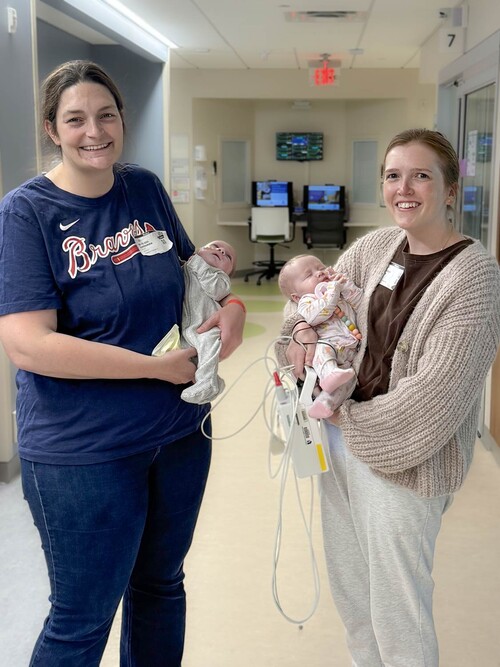
While waiting for a heart for Grace, doctors asked her parents if they would be willing to donate her heart valves to another child in need. The Rays enthusiastically agreed. Grace received her new heart on May 10, 2025, after just 45 days on the transplant list.
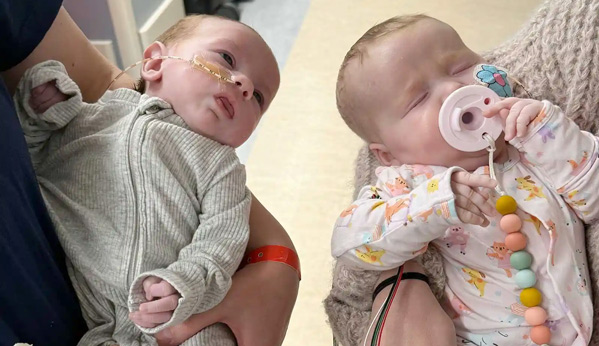
Two days later, 12-day-old J.R. Riley received Grace’s heart valves. Doctors expect the valves to grow with J.R., eliminating the need for additional open-heart surgeries over the next few years.
Photo: J.R. and Grace in the hospital shortly after their surgeries.
Building Community Before and After Transplant
About a month after Grace’s surgery, Rhian and Riley Ray brought their daughter home, grateful for the comprehensive team that cared for her. “It felt like all the doctors and nurses were as emotionally invested in Grace as we were,” Rhian Ray said. “They want to see these babies grow and be successful.” Rhian Ray sends photos and updates often, which is a treat for Dr. Sherwin and her colleagues. “It makes a huge difference to see kids that we've cared for out in the real world, living their regular lives and thriving.”
The Rays also remain friends with many of the fellow PCICU parents they met during Grace’s inpatient stay, including the Riley family, who celebrated J.R.’s first birthday in April 2026. “It’s incredibly validating and comforting to connect with people who know what it’s like and how much these kids have been through,” Rhian Ray said. “Having that understanding and camaraderie, both then and now, is truly a lifeline.”
Looking Ahead
To support her transplanted heart, Grace will attend medical appointments every few months and take immunosuppression medications for the rest of her life. According to Dr. Shea, Grace should "be able to go to school and play all the sports that she wants. She should have a relatively normal childhood, except that she takes daily medicines and comes to see us a few times a year.”
Infant heart transplants typically last around 18 years, so Grace’s parents know she may need another transplant in her lifetime. Still, Rhian and Riley Ray are thankful to see their baby girl growing and full of life, and they recommend Duke to other parents facing the same challenges. “You've got to get in with Duke," Rhian Ray said. “They just know so much about the pediatric heart transplant and cardiology world in general. There's no better place on the East Coast.”