
Traditional CABG |
Minimally Invasive CABG |
| One large incision + broken breastbone | Several smaller incisions |
| Requires cardiopulmonary bypass | Does not require cardiopulmonary bypass |
| More time in the hospital, longer recovery | Less time in the hospital, shorter recovery |
| Increased risk of bleeding and stroke | Reduced risk of bleeding and stroke |
| Can treat multiple blocked arteries on all sides of the heart | Limited to addressing one blocked artery on the front of the heart |
Minimally Invasive Coronary Artery Bypass Grafting
A Less Invasive Approach for Heart Bypass Surgery
Minimally invasive coronary artery bypass grafting (CABG) is a less-intrusive, better-tolerated approach to heart bypass surgery for the treatment of coronary artery disease. Duke is one of the few centers in North Carolina offering minimally invasive CABG, which is also referred to as MIDCAB (minimally invasive direct coronary artery bypass grafting) or robot-assisted minimally invasive CABG. Our goal is to optimize blood flow to your heart, protect heart function, and help you recover faster.
×
Traditional CABG vs. Minimally Invasive CABG
Traditional CABG
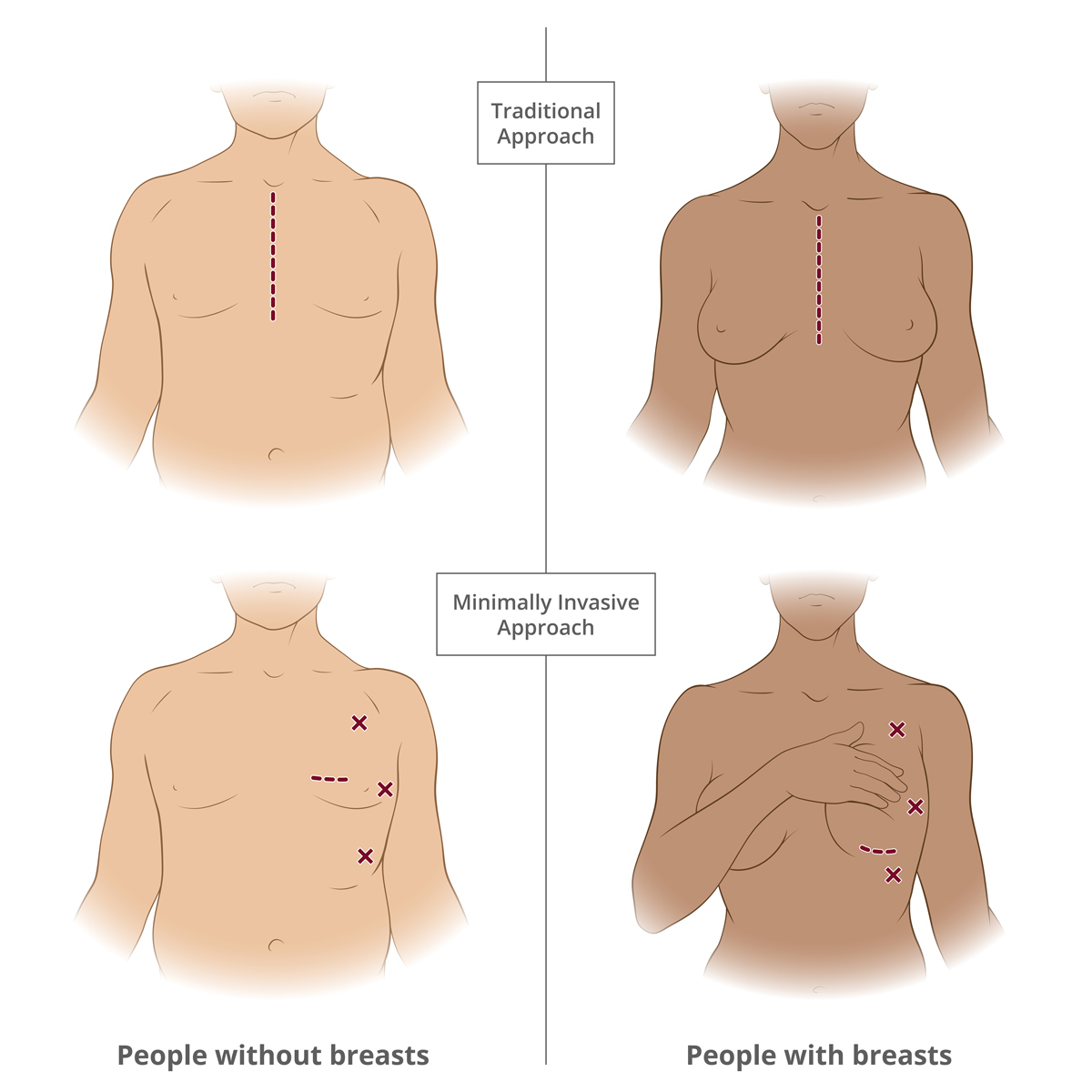
Traditional CABG requires a sternotomy -- a standard approach for open-heart surgery that requires one large chest incision and breaking the breastbone (sternum). Recovery takes at least 6 weeks; during this time your activity is limited while the breastbone heals.
During surgery, the heart is stopped and a cardiopulmonary bypass machine maintains blood flow and oxygenation throughout the body. This can cause inflammation, tax your organs, and increase your risk of stroke.
Traditional CABG is ideal for people who:
- Have certain risk factors
- Need multiple arteries bypassed
- Need other heart repairs, including valve surgery
Minimally Invasive CABG
During minimally invasive CABG, heart surgeons who are specially trained in minimally invasive techniques make multiple small incisions on the left side of the chest between the ribs. The surgeon uses robotic arms and long tools to bypass the blocked artery. Because the sternum does not have to be broken during the procedure, there are very few activity restrictions after surgery and you recover faster.
The heart remains beating throughout surgery, so the body continues to receive normal blood flow and oxygenation. This reduces the stress on the body, inflammation, and risk of blood clots in vital organs like the brain.
Minimally invasive CABG is ideal for people who:
- Need only one coronary artery bypassed, specifically the left anterior descending (LAD) artery (if you have additional blocked vessels, known as “multivessel coronary artery disease,” you may be a candidate for a hybrid approach with stents)
- Have a higher risk of complications with traditional CABG
- Prefer a less-invasive approach
Duke University Hospital
Minimally invasive heart surgeries take place at Duke University Hospital in Durham.
Minimally Invasive CABG Steps
Three cuts called “port incisions” are made on the left side of the chest. Each one is less than one inch long.
Using robotic arms, surgeons remove the left internal mammary artery (LIMA) from the chest wall.
A small incision is made between the ribs -- this is called a thoracotomy. In women, every effort is made to make this incision under the left breast to minimize visible scarring. In men, the incision is typically made near the nipple.
The LIMA is connected to the left anterior descending (LAD) artery, allowing blood to flow around the blockage.
The surgery usually lasts between three and four hours.
Call for an Appointment
Recovery
After surgery, you can expect to spend less than a day in an intensive care unit before being transferred to a step-down unit. The typical hospital stay is three to four days.
You’ll return for a follow-up appointment about two weeks after hospital discharge, and you can then return to work and resume most normal activities.
Hybrid Revascularization (Surgery + Stenting)
If more than one vessel needs to be bypassed, you may be eligible for hybrid revascularization. This combines minimally invasive CABG with stenting via percutaneous coronary intervention (PCI). PCI is a cardiac catheterization procedure during which a stent is placed in a blood vessel.
Why Choose Duke
Team Approach to Care
In addition to a highly specialized minimally invasive heart surgeon, your care team includes a cardiothoracic anesthesiologist, cardiologists, physician assistants, nurse practitioners, and others who devote their time to caring for people undergoing minimally invasive heart surgery.
Tailored Heart Revascularization
At Duke, we offer all available revascularization options, including traditional CABG, minimally invasive CABG, hybrid revascularization, and PCI alone. We consider your unique condition, anatomy, disease severity, and personal preferences to recommend the strategy that gives you the best chance of returning you to normal life.
Clinical Research
Duke heart surgeons are nationally known for expertise and innovation. We actively participate in registries and studies to learn more about minimally invasive CABG.
This page was medically reviewed on
07/27/2026
by