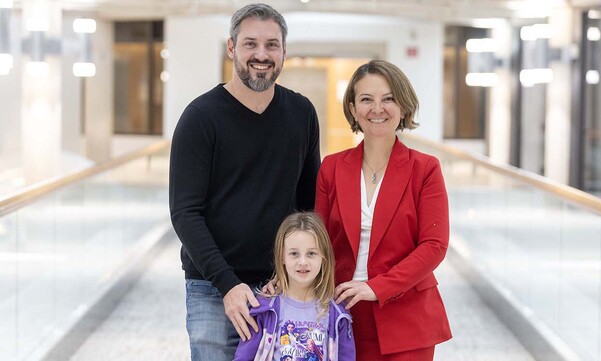
Jaymes Morra was a toddler when he was diagnosed with catecholaminergic polymorphic ventricular tachycardia (CPVT), a rare genetic heart rhythm disorder that can cause sudden cardiac arrest during exercise. In 2023, he underwent an advanced surgery at Duke Health to help prevent dangerous arrhythmias. Today, nine-year-old Jaymes’ CPVT is well-controlled, and he plays sports with his friends. “It's a scary diagnosis,” Jaymes’ mom Christine Morra said. “But on the flip side of that, there's hope.”
A Family Affair
The signs were anything but obvious. Jaymes’ mother Christine Morra had fainting episodes, and his older sister Julia Morra had seizures, but no one suspected genetic heart disease until Jaymes’ older brother Joey Morra passed out during gym class at school. Doctors noticed something abnormal on Joey’s echocardiogram (an ultrasound of the heart). More testing showed catecholaminergic polymorphic ventricular tachycardia (CPVT). “Joey started the cascade,” Christine Morra said. “Then Julia was tested, and then myself and Jaymes. It rooted back to a spontaneous mutation in me.”
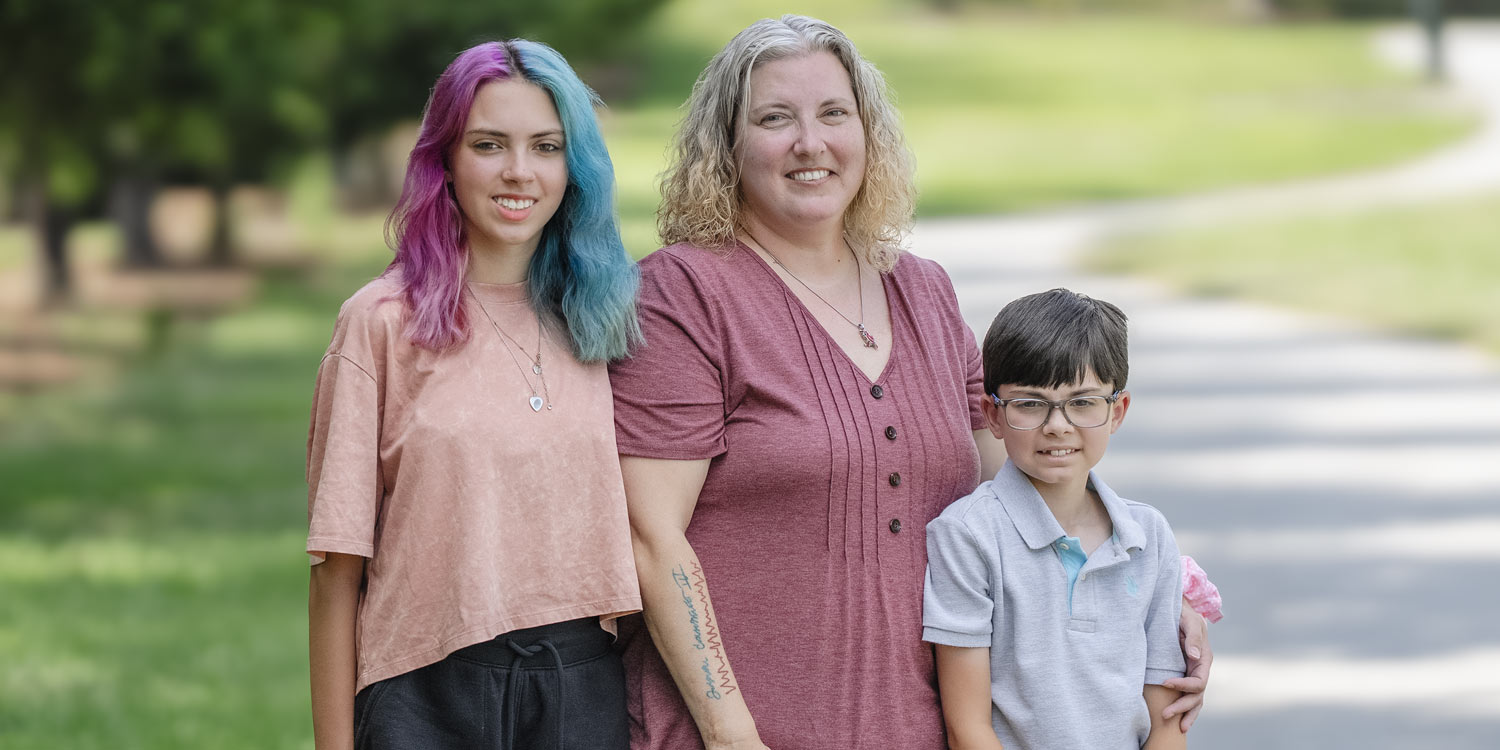
Julia, Christina, and Jaymes Morra
A Hard Pill to Swallow
CPVT has a reputation for being deadly, with fatality rates as high as 50% before the age of 30 without proper treatment.1 The condition is triggered when adrenaline floods the heart during physical activity or emotional distress. CPVT can lie dormant for years or even decades and cause virtually no symptoms until it’s too late. “The hardest pill to swallow was Jaymes being diagnosed when he was three years old,” Christine Morra said.
Seeking Expert Care at Duke
When the Morra family moved from Connecticut to North Carolina in 2020, Duke Health’s robust Pediatric Cardiovascular Genetics Program, which is part of a larger pediatric and adult cardiovascular genetics collaboration, made it the obvious choice for their care. There they were seen by pediatric cardiologists and electrophysiologists who specialize in treating rare genetic or “heritable” pediatric arrhythmias like CPVT. “We were able to get set up there rather quickly,” Christine Morra said.
Remote Heart Monitoring
In 2021, Duke doctors inserted a cardiac monitor to continuously record Jaymes’ heart rhythm. It transmits the data to his Duke care team so they can quickly identify suspicious activity, notify the family, and adjust his treatment plan accordingly.
In early 2023, Jaymes had a breakthrough arrhythmia during a taekwondo test. He had been visibly nervous, bouncing his legs up and down. When Christine Morra got the call from Duke, she knew exactly when it happened. “Rather than increase or change Jaymes’ meds, we bumped up the date for his surgery because we knew adrenaline had caused the episode.”
Sympathetic Denervation Surgery
Sympathetic denervation is a minimally invasive surgery that reduces dangerous breakthrough arrhythmias by removing part of the left sympathetic nerve, which releases adrenaline into the heart. Less adrenaline to the heart means fewer arrhythmia episodes. Duke pediatric surgeon Ryan Antiel, MD, is one of only a handful of pediatric-specialized surgeons in the nation who routinely performs sympathetic denervation surgery in children with these high-risk arrhythmias.
“It was nice to have Jaymes undergo surgery close to home,” Christine Morra said. Since Jaymes’ surgery, he has had a few minor arrhythmia episodes, but they haven’t stopped him from playing baseball and volleyball, just like other kids his age. “The surgery has given us some comfort in knowing that adrenaline doesn't get to the heart as much as before.”