When Dominique Williams woke up at Duke University Hospital’s Emergency Room after being shot seven times, all she could do was cry. She felt scared, alone, and misunderstood -- until she met someone from the Duke Violence Recovery Program. It offers support to violent crime victims and their families during and after their hospital stay, and helps them forge a path to a better future.
Treating gun violence as a public health concern, the Duke Violence Recovery Program aims to prevent readmissions and lower the human life and financial costs of violence in the Durham community. “When I was at my lowest, they helped me see that, not only will I heal, but one day I will be back to myself again,” said Williams.
An Ordinary Day Ends at the Emergency Room
In December 2024, Williams was unloading Christmas decorations from her car when she looked up to see a gun pointed at her face. As she turned to run, she was shot and left face down on the sidewalk with a broken leg, broken ribs, internal bleeding, and unable to yell for help because of a punctured lung.
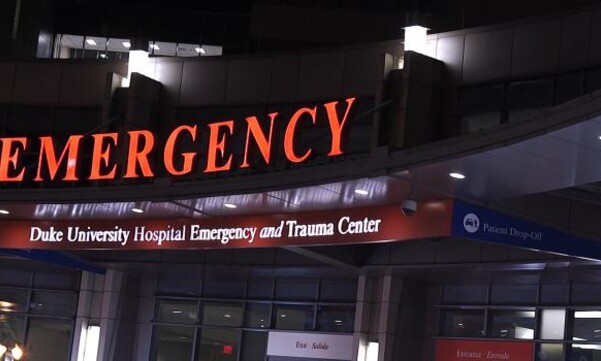
She remembers her entry into the emergency room like something out of a movie, surrounded by a crowd of doctors and nurses rolling up their sleeves to get to work while police and detectives stood nearby. When she woke up the next day with chest tubes and incisions all over her body, “the doctors were talking to me, but it wasn’t anything I could process,” said Williams. “I didn’t even feel like a real person.”
Then, Demetrius Lynn, one of four staff members who facilitate the Duke Violence Recovery Program, entered her room. He talked to Williams about his own experience with gun violence and related to her when she felt like no one else could. “I thought, wow, this person really sees me right now,” she said.
Creating Calm in an Environment of Chaos
John Watson recalls a similar experience after he was shot once in his chest and once in his head, leaving him paralyzed. He woke up from a coma to doctors hovering over him, but “Demetrius came in by himself and just talked to me, which really took down my anxiety,” he said.
Every weekday, staff from the Duke Violence Recovery Program meet with patients hospitalized as a result of community violence, including physical assault, gunshot wounds, and stab wounds. The program also supports gunshot and stab wound survivors who receive treatment in the emergency department but are not admitted to the hospital. Program Manager Uzuri Holder explained that this simple act helps build trust and creates a sense of normalcy in a situation that is far from normal. “Sometimes we would talk about the trauma, and sometimes we wouldn’t,” said Watson. “It was more about him getting to know me, not an interview.”
Support In the Hospital and at Home
During their daily visits, staff members talk to patients about their needs and often communicate on their behalf to doctors, nurses, and family members. After discharge, they check in via a phone call. People who live outside of Durham, like Williams, who lives near Raleigh, are connected to resources closer to home. “They directed me to different mental health resources and even monetary resources for help with medical bills,” said Williams.
Durham residents between the ages of 15 and 40, like Watson, have the option to continue in the Duke Violence Recovery Program’s “intensive track,” for up to a year. Staff help people set and achieve goals, keep up with medical appointments, check in with a phone call twice a month, and perform in-person visits. The program also offers an eight-week-long support group called Healing & Hope. “Sometimes people just want the phone calls and to have someone check up on them,” said Holder. “We’re there to support them with anything they need.”
Setting Goals and Navigating Recovery
With help from the Duke Violence Recovery team, Watson accomplished several goals, including securing health insurance and participating in a public speaking event to share his story. Staff also connected him to specific case workers and social workers in Durham County. He recently completed the support group, an achievement he called life-changing. “I was around people who have been through the same thing I was,” said Watson. “To be able to share my thoughts and feelings without any judgement was absolutely amazing.”
An ongoing goal for Watson -- which Holder said is usually the most common goal but also the most difficult to accomplish -- is finding affordable housing. “Not just housing, but staying away from problem areas in Durham,” said Watson. “I don’t want to go back to an area where I could be in another fight-or-flight situation.” Staff continue to support Watson as he works with Duke Case Management to help him find a home to meet his new physical needs in a wheelchair and keep him in a safer part of town.
Healing and Hope
Two years after she was shot and one year after he was shot, Williams and Watson continue their path to healing and credit the Duke Violence Recovery Program with instilling hope that things will get better. Today, Williams serves on the 2026 fellowship team for Everytown for Gun Safety and is the Wake County local group lead for Moms Demand Action for Gun Sense in America. “The violence recovery team helped me so much, and now I want to do that for others,” said Williams.
Watson now considers Demetrius Lynn a close friend and sees a future for himself as an advocate for increasing accessibility for people with disabilities. “I can’t even imagine what my life would be like right now without this program,” said Watson.