Lung cancer is one of the most common cancers, but it’s also surrounded by a lot of stigma that can keep people from getting screened or seeking care. At the same time, there is a lot of reason for hope. New ways to detect lung cancer earlier and exciting advances in immunotherapy are helping people live longer and improving their quality of life.
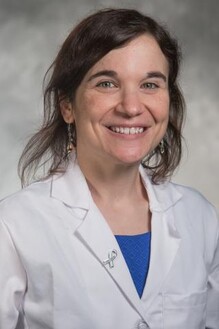
As part of our ongoing Conversations in Cancer series, Duke Health medical oncologist Diane Reidy-Lagunes, MD, talks to Laura Alder, MD, a Duke medical oncologist who specializes in lung cancer, about lung cancer stigma, screening, and one of the most exciting new treatments for small cell lung cancer: BiTEs, or bispecific T-cell engager therapies.
Anyone with lungs can get lung cancer -- and yet there is still a stigma associated with it. What do you tell people who may feel guilty for having smoked?
No one deserves lung cancer. There are so many factors that go into developing cancer that are completely out of anyone’s control. We see all types of people in our clinic, from a 30-year-old vegetarian marathon runner to older people. Everyone deserves support, the best care possible, optimal treatment, and resources.
Who should be screened for lung cancer, and what does screening involve?
There are multiple guidelines, but you should get a yearly screening if you’re between 50 and 80 years old and have smoked for 20 years or heavily for a shorter amount of time, if you have a strong family history of lung cancer, or if you’ve been exposed to a lot of secondhand smoke. It’s always okay to ask your doctor if you should get screened. It involves a fast, painless imaging test called a low-dose computed tomography scan that only takes a few minutes.
What are BiTEs, and how do they work?
BiTEs are drugs that activate the body’s T-cells, which are important components of the immune system. BiTEs have two arms. They grab the tumor by a protein on its surface with one arm, and the T-cell with the other. Then they bring the tumor and the T-cell together, which helps the T-cell kill the cancer. This also helps to activate more immune cells.
What is tarlatamab?
Tarlatamab is a BiTE that was approved two years ago to treat people whose small cell lung cancer has continued to grow after chemotherapy. One of the most exciting things about it is that when it works, it can work for a really long time. Before its approval, people with advanced small cell lung cancer could expect to live about one year. Now, we have a few patients who are continuing on treatment for well over a year. And some recent data showed that not only does it work in the body, but it gets into the brain, too.
Tarlatamab is given through an IV in the hospital. Can you walk us through how this works?
The first dose is a baby dose to help the body get used to the drug. A week later, you get the normal dose. It's given three weeks in a row, for one day each week. So day one, day eight, day 15, and then it's every two weeks. Because side effects are most likely with the first two doses, you are monitored closely for about 24 hours after each of those doses. Some clinical trials are assessing whether that can be varied, like a higher dose less frequently.
What are the side effects of tarlatamab?
Tarlatamab has two unique side effects, but as long as we know what to look out for, the drug tends to be safe and manageable. The first side effect is cytokine release syndrome, which happens when the inflammatory response overreacts and releases cytokines, or inflammatory hormones. This can cause the blood pressure to drop and make it harder to breathe, and can also cause fever. In rare cases, it requires admittance to the hospital for treatment and observation. The other side effect is neurotoxicity, or inflammation in the brain. In both cases, steroids are given to calm the inflammation. We have other drugs if that doesn’t work.
Why has small cell lung cancer been so difficult to treat?
There are a limited number of treatments for small cell lung cancer. It tends to come back very rapidly after chemotherapy, and metastasize, especially to the brain. It’s also good at hiding from the immune system, which makes immunotherapy less effective.
Can you share a little bit about your research?
First, we’re running multiple clinical trials. We have a clinical trial available in every line of small cell lung cancer treatment for both early stage and advanced metastatic cancer.
We’re also examining blood samples from people with small cell lung cancer to learn how the tumor behaves. We can see how the tumor changes in response to treatment by assessing inflammatory markers and tumor DNA in the bloodstream over time. We’re hoping that this will let us determine who will benefit from tarlatamab. We’re also interested in learning whether we can prevent small cell lung cancer from progressing if we can catch it earlier using some of these biomarkers.
And we’re using cellular and 3D tissue models to see whether there’s something that we can add to tarlatamab to make it work for more people. Unfortunately, not everyone responds to the drug. Only about 40% of people see their tumors shrink, and 30% achieve disease stability, which means no growth and no new sites of disease. This is more than we get for any chemotherapy-based treatment, but it could be better.
Are other treatments besides BiTEs being studied for small cell lung cancer?
We are running clinical trials at Duke to study antibody drug conjugates, which are showing a lot of promise. They act like a smart targeted bomb that goes to where the cancer is and then releases the chemotherapy where it needs to be.
Why is it important to receive care at a cancer center like Duke's?
Duke’s Small Cell Lung Cancer Center of Excellence brings together experts from multiple specialties to provide a comprehensive treatment plan. People who come to our center see specialists in medical oncology, surgical oncology, radiation oncology, and neuro-oncology. Our team also includes a dedicated pharmacist, behavioral health support, nutrition support, and social workers. All are well-versed in making referrals and giving people lots of support so they know that every step of the way they’re not going through this alone.
We also collaborate with colleagues across Duke Health. We work with the Center for Brain and Spine Metastases because more than 60% of people with small cell will have brain involvement during the course of their disease. We also work with the Center for Cellular and Gene Therapies because more and more cellular therapies can treat small cell.
We have strong partnerships with patient advocacy groups and welcome the opportunity to partner with community physicians for second opinions or for providing any advice or clinical trial opportunities.
We're really committed to making sure that every patient with small cell has access to the most novel treatments through our partnership with their local oncologists. We're excited to position ourselves as a pillar in the community, locally and nationally, to help move the needle forward as much as we can for people with small cell lung cancer.
When you look at lung cancer today compared with when you started practicing, what gives you the most hope?
There’s so much. We are learning more about cancer than ever before -- how it grows, how it evades the immune system, and how we can target it more precisely.
Treatments have evolved substantially, and new ones are emerging all the time. We have targeted therapies that are individualized to the patient’s unique tumor biology. We have a lot of improvements in immunotherapies, and more intelligent chemotherapy delivery systems. There are even some exciting advances in vaccines that we’re seeing in melanoma treatment that could hopefully be applied to lung cancer.
But perhaps most importantly, we're learning how to detect cancer earlier and how to develop treatments that can produce longer and more durable responses. There is still so much work to do, but the pace of progress is remarkable.