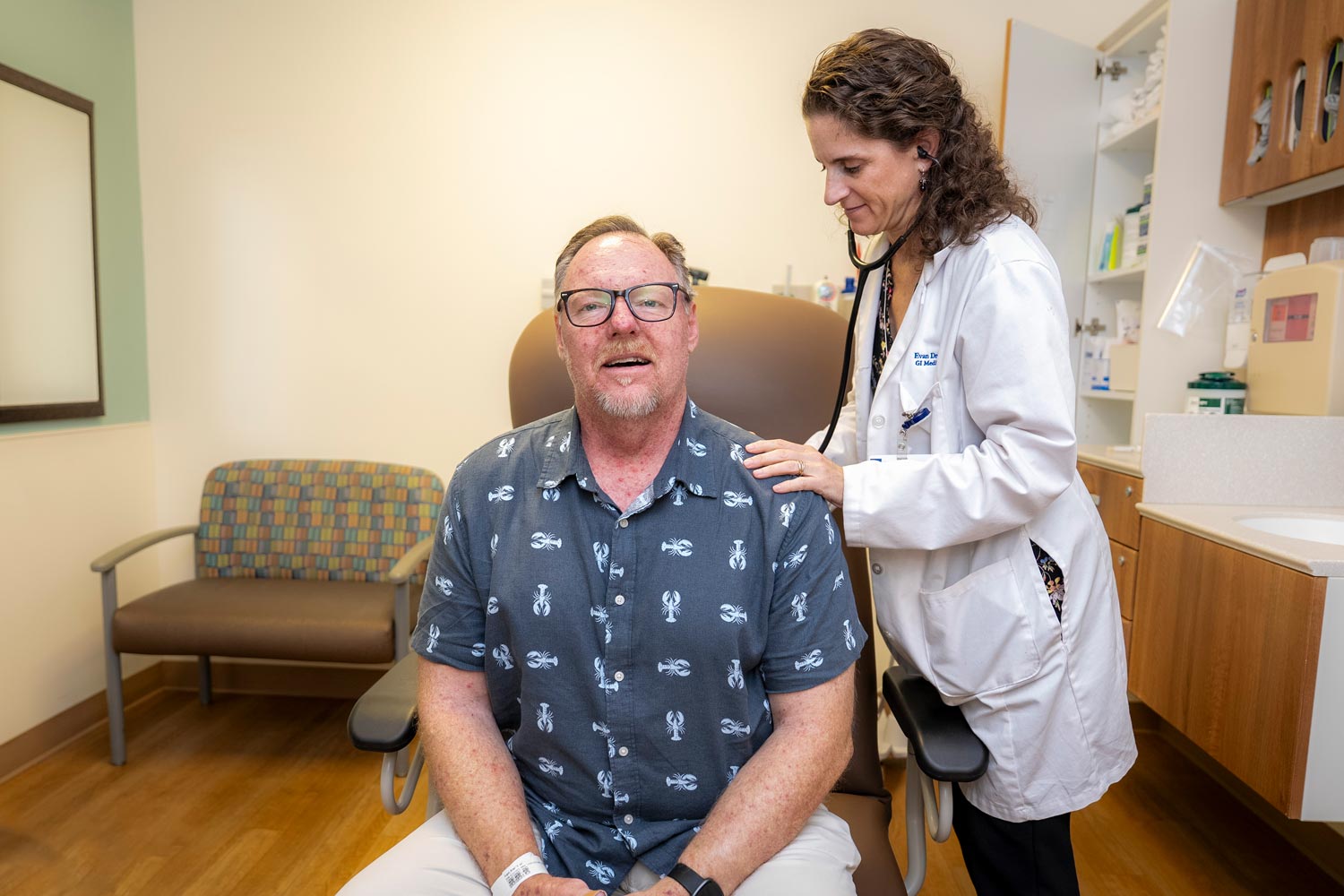
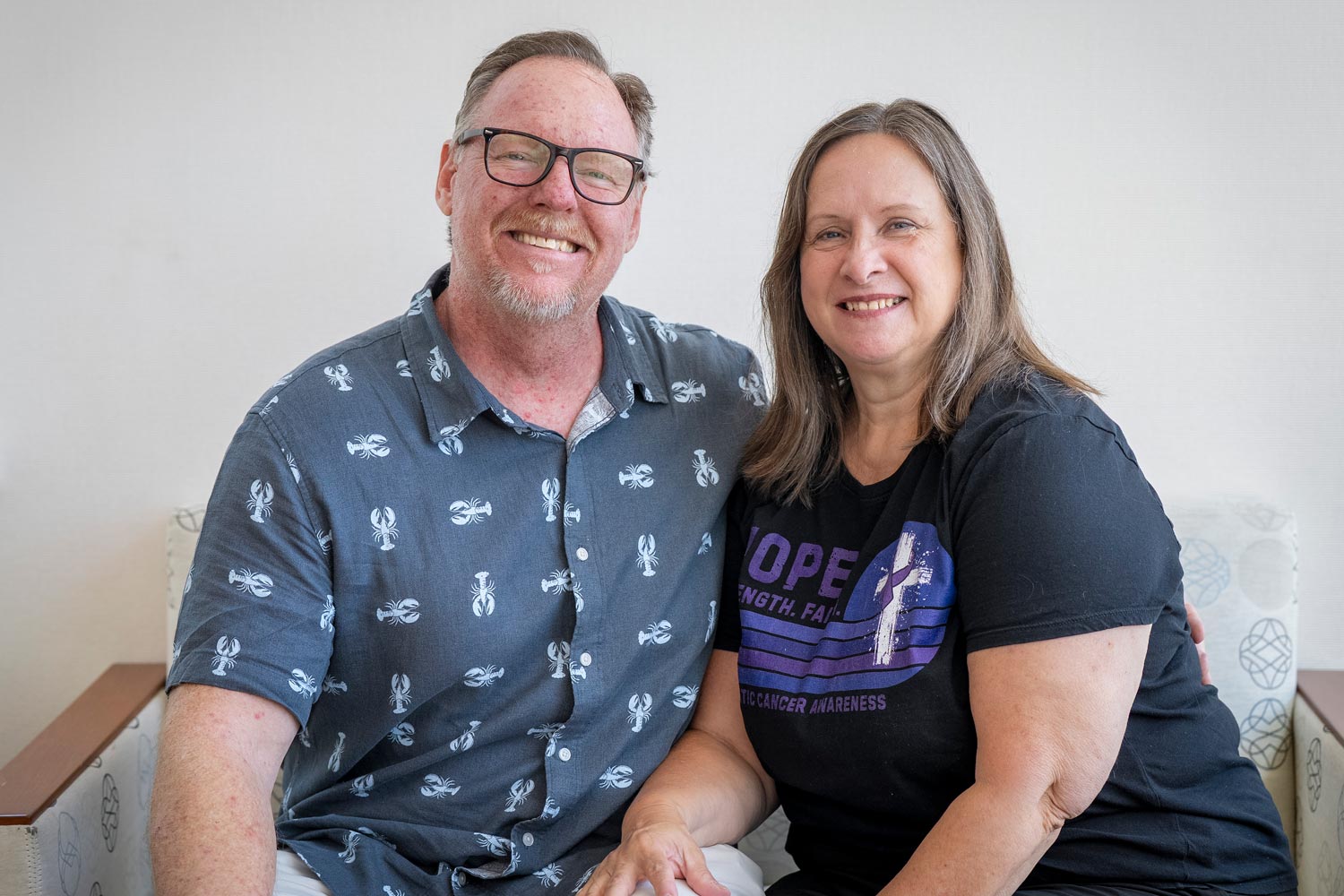
Brad Dugai, 55, underwent chemotherapy and radiation to treat his pancreatic cancer, but the tumors kept coming back. At Duke Health, he joined a clinical trial of a new drug called daraxonrasib, and now his imaging scans show no evidence of disease. “A lot of days I don't even feel like I have cancer,” he said. “I can't say enough good things about my team at Duke.”
Treatment-Resistant Pancreatic Cancer
In May 2024, Brad Dugai was diagnosed with stage 3 pancreatic cancer at a hospital near his home in Mathews, VA. The following month he started chemotherapy. “It wreaked havoc on me mentally, physically, and emotionally,” said Dugai. “I’d be on calls at work, talking about things I have a good understanding of, and it was like they were speaking Chinese.”
When scans showed that his tumor was getting bigger, his oncologist switched his chemo. By November, the tumor had shrunk enough that he transferred his care to the Miami Cancer Institute and underwent radiation therapy. Radiation destroyed the tumor, but the cancer returned in the summer of 2025. Dugai’s oncologist told him that Dugai had four weeks to join a clinical trial, or else he would have to restart chemotherapy.
“The pain and my limp were completely gone.”
Dugai found that alternative at Duke, where researchers were enrolling patients in a study of a new therapy for pancreatic cancer. “I was supposed to start chemo on a Thursday morning,” he said. “The night before, we were sitting down for dinner, and I got the call from Duke that they had a slot for me. To me, it was God’s hand at work.”
Dugai and his wife traveled to Duke on September 12. “I had cancer-related pain in my groin and down my leg, and I was walking with a pretty significant limp,” he said. “They gave me the first dose of daraxonrasib, and within 24 hours, the pain and my limp were completely gone.”
“A big mission of ours is to make sure every pancreas cancer patient who needs it gets access to this therapy.”

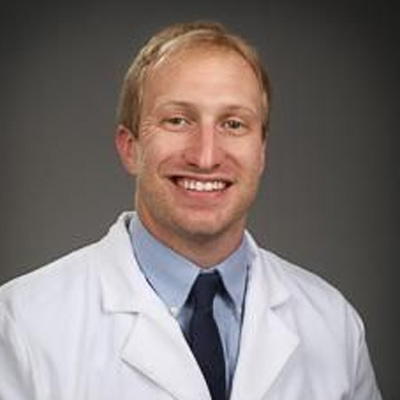
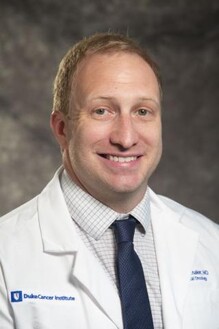
“Daraxonrasib works very quickly,” confirmed Duke medical oncologist Ryne Ramaker, MD. “People with pancreas cancer can get sick pretty fast because the disease is so aggressive, so it’s really helpful that it can be effective in a matter of days to weeks. And we’ve seen that the majority of patients derive some benefit from this therapy.”
Dugai certainly did. “On daraxonrasib, my tumor shrank to the point where it’s not even visible on imaging,” he said. “There is no evidence of disease.”
When Dugai acquired a skin rash as a side effect of the drug, Duke dermatologist Megan Jamison, MD, joined his cancer team. “She was relentless in trying to crack the code of this rash, and found a treatment that worked. Because Dr. Jamison handled my dermatological care so expertly, I moved all my dermatological care to Duke,” he said.
“If people come to Duke, they can know that this won't be the first time that their doctors have used daraxonrasib,” said Dr. Ramaker. “We’ve treated many people, because we were involved in the clinical trials that validated its effectiveness. Our team is very familiar with side effects as well as with the logistics of prescribing and administering daraxonrasib.”
Duke Offers Expanded Access Program for Daraxonrasib
Dr. Ramaker said that Duke’s Pancreas Center treats eligible people with pancreas cancer through a federal Expanded Access Program, which allows compassionate use of a drug before it is approved by the FDA. “A big mission of ours is to make sure every pancreas cancer patient who needs it gets access to this therapy,” he said.
Thriving After a Clinical Trial
Now, Dugai takes his daily pill and returns to Duke every month for lab work. He keeps busy with construction projects around the house, going to the gym three times per week, and volunteering as a mentor through nonprofits and social media support groups.
As a clinical trial participant, he will continue to receive daraxonrasib after the trial concludes. He offers this advice to people who were in the same situation he experienced. “If a clinical trial offers you hope, then jump on it,” Dugai said. “Without a shadow of a reservation, I would say Duke is an amazing place to do it.”