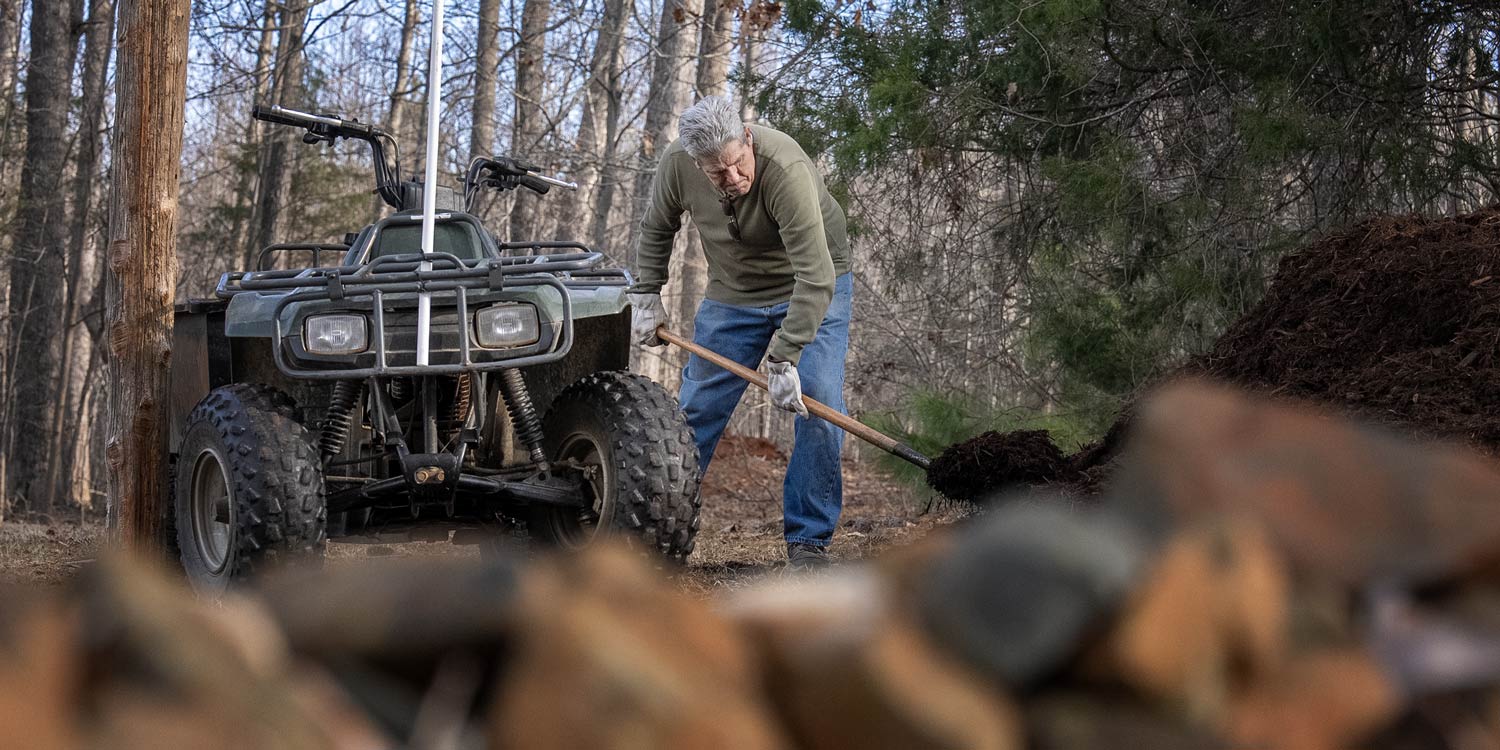
In 2014, Mickey Whyte of Siler City had both ankles replaced. Fast forward eight years, and the pain in his left ankle was so intense that he was having problems walking. Following a revision total ankle replacement at Duke Health, he’s back to his favorite pastimes of hunting and fishing. “I can do everything I could before,” Whyte said.
An Active Life Interrupted by Ankle Arthritis
Mickey Whyte, 67, was a carpenter and active outdoorsman, so when ankle arthritis began to slow him down significantly in the mid-2010s, he knew he had to take action. First, he had his right ankle replaced, and then “it wasn’t another year before my left ankle needed to be replaced, because it was also bone-on-bone,” he said.
Diagnosis at Duke
Unfortunately, as years passed, cysts grew around the metal components of Whyte’s left total ankle replacement, rendering it very painful. In August 2022, his orthopaedic surgeon referred him to Duke foot and ankle orthopaedic surgeon Karl M. Schweitzer, Jr, MD for further evaluation and consideration for a revision total ankle replacement, which would be complex due to the amount of bone loss that had occurred.
After a comprehensive evaluation that included a weight-bearing CT scan of Whyte’s ankle, Dr. Schweitzer confirmed that Whyte had lost a lot of supporting bone around his ankle and would need a series of procedures before a revision total ankle replacement could be performed.
Two Successful Surgeries
The first surgery "involved removing his metal implants and cleaning the area out,” said Dr. Schweitzer. “Then I filled in the cyst areas to strengthen the bone, and fused the joint below the ankle, to gain stability. This let me build a foundation to do the revision ankle replacement.”
“Mr. Whyte healed pretty quickly,” Dr. Schweitzer continued. He returned for his revision total ankle replacement a few months later, and Dr. Schweitzer “used his native bone to salvage his failed total ankle replacement, which is generally preferable to using a custom implant because I'm keeping future reconstructive options open.”
A month later, Whyte was able to put weight on the ankle while wearing a walker boot, then progressed to wearing a sneaker. “It was just getting better and better,” said Whyte. “I’m pleased with the outcome.”
The Importance of Seeking Out Foot and Ankle Specialists
If you’re in need of an ankle replacement or an ankle replacement revision, or have a painful ankle replacement that needs further evaluation, Dr. Schweitzer stresses that it is critical to choose a fellowship-trained foot and ankle orthopaedic surgeon who performs these procedures regularly. “People are referred to Duke from around the country because we perform so many primary and revision total ankle replacements,” he said. “We understand the nuances and tailor the procedure to the demands of each person and the uniqueness of each of their ankles. We pay close attention to their medical history, bone quality, alignment, and prior surgeries. Details matter and that is how we are able to achieve the best outcomes.”
Duke doctors are leaders in the field, performing high-level research to improve outcomes and helping device companies develop the next generation of ankle replacement systems. “We’re always working to improve our patients’ outcomes. What matters most is getting our patients back to doing the things they love,” he said.
Leaders in TAR Revision Research
“Our foot and ankle division has a respected history in this field and done a lot of research looking at outcomes after primary and revision total ankle replacement,” said Dr. Schweizer. “In addition to collecting outcomes data on my total ankle replacement patients, I'm currently studying how much bone you need in order to do a successful revision. It’s an exciting time and we are trying to provide answers to better guide surgeons in helping more patients.”