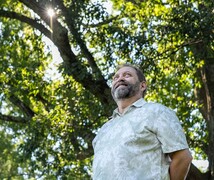
Bryant Grey was only 31 when he was diagnosed with an aggressive lung disease. “It was insane,” he said. “It felt like one day I was short of breath, and the next thing I knew I needed a lung transplant.” Grey came to Duke Health, where he was transplanted after spending only three weeks on the transplant list. “If you do the work, take care of yourself, and trust your team, you can beat the odds,” Grey said.
Confronting a Serious Disease
In October 2023, Bryant Grey, then 31, went to the emergency room because he was so short of breath. After 11 days in the hospital, he was sent home on supplemental oxygen. A pulmonologist in his hometown of Charlotte diagnosed Grey with non-specific interstitial pneumonia (NSIP), a chronic autoimmune disease that causes inflammation and scarring of the lungs’ air sacs.
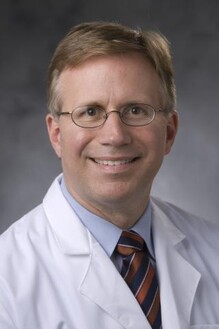
In spring 2024, Grey began a clinical trial of a drug called rituximab. Around the same time, he heard about Duke Health from some neighbors, and made an appointment for a second opinion. He met with pulmonologist and critical care specialist Julie Fried, MD. “Dr. Fried agreed with everything my team was doing, but referred me to Duke’s lung transplant team, given how aggressive my disease was,” said Grey.
Time for Lung Transplant at Duke
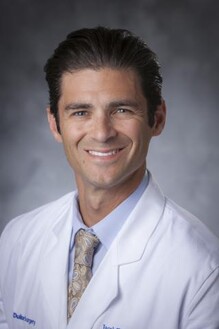
When rituximab didn’t work, “transplant was my only option,” Grey said. That fall, he moved to Durham and was added to the list on November 1. He was transplanted three weeks later by thoracic surgeon Jacob A. Klapper, MD. “My surgeons were top of the class,” said Grey. “Everyone at Duke has been amazing.”
After the transplant, Grey stayed in the hospital for 21 days. “Every day, your team visits you,” he said. “You’re never in the dark -- you’re always aware of what the next step is and what you need to do to get home. You know these people have your best interest at heart.”
Beating a Serious Complication
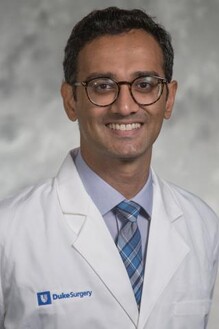
A few days after Grey was released, he began having trouble swallowing. Because Grey has a condition called patulous esophagus, in which the esophagus doesn’t close easily, he had been prepared for the fact that he might need a feeding tube after his transplant. He came back to Duke to have the feeding tube inserted. During the procedure, the contents of his stomach entered his lungs, and Grey became very ill. Luckily, he was in the right place. “We're one of the highest-volume lung transplant centers in the country,” explained lung transplant surgeon Kunal J. Patel, MD, who was a member of Grey’s surgical team. “We have a lot of experience getting very sick people through their transplants, and managing the complications that invariably arise.”
“Lung transplant is a team effort,” added Grey’s doctor, transplant pulmonologist John M. Reynolds, MD. “The number of people in different disciplines who care for our patients is enormous, and their areas of expertise are needed to manage challenging medical conditions.” Dr. Reynolds also credits Grey with his recovery. “True to Bryant’s character, he took everything related to his surgeries, hospitalization, and altered diet in stride and got better,” he said. “He worked hard, kept a great attitude, and bounced right back.”
Hear Bryant and others talk about lung transplants at Duke.
The Pleasures of Picking Up Poop
After nine months, Grey’s feeding tube was removed on September 30th, 2024 -- a meaningful date for him. “That’s when I realized that I am finally done with this part of my life,” he said. “I remember I took my dog for a walk, and I was able to pick up her poop without any medical equipment tugging on me. That simple act was everything to me.”
Today, Grey is back to hanging out with his friends, going to concerts, and spending time outside. “I feel amazing,” he said. “No oxygen, no cord. I’m back.”