Welcome to DukeHealth.org.
Skip over navigation
  • Home
  • Patient and Visitor Info
  • Physicians
  • Services
  • Clinical Trials
  • Event Calendar
  • Locations
  • Health Library
    • Topic Centers
    • Care Guides
    • Health Articles
    • Advice from Doctors
    • Patient Stories
    • Video
    • News
  • About Duke Medicine

Quick Links

  • Appointments
  • HealthView Patient Login
  • Quality and Safety
Home > Health Library > Health Articles > A New Normal for Cancer Survivors
Jumbo Large Regular Text:
Print
Health Articles

A New Normal for Cancer Survivors

About This Article

Article Details

From: DukeMed Magazine
Published: Nov. 16, 2009
Updated: Mar. 14, 2011

Related Content

Services

  • Cancer
  • Cancer Patient Support

On Other Web Sites

Duke Resources

  • Preston Robert Tisch Brain Tumor Center
  • Duke Cancer Care Research Program

Share

By Scott Huler

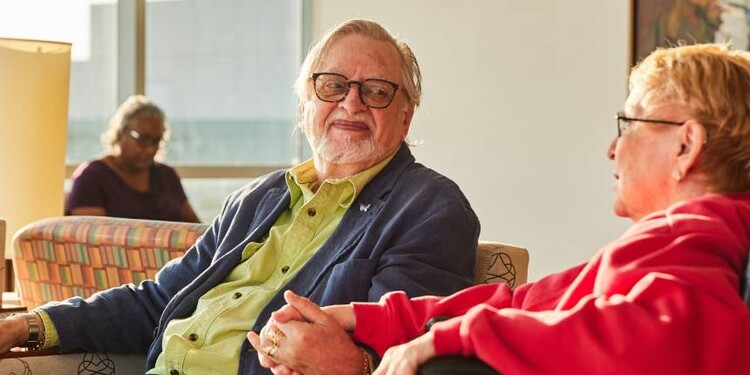
cancer.jpgOne morning each week, the waiting room of the Duke Breast Cancer Survivors Clinic fills up with half a dozen women.

They make their way to the blood pressure gauge, pumping, listening, and writing down their own readings. They take their own pulses, check their weight. They even use notepad computers to answer questions about their physical, emotional, and psychological well-being.

The one thing the women don’t do in that waiting room is wait.

"It's so nice to talk to other people going through similar things," says Martha Hall, who's been cancer-free for four years and recently attended the clinic for her annual checkup.

What's more, after the women fill out their materials, instead of hanging around avoiding eye contact, they meet with nurse practitioner Kathy Trotter -- as a group. They discuss issues they face as cancer survivors: bone density, depression, weight gain, nutrition, exercise, and what they can do to take care of themselves.

The Survivors Clinic represents a new, empowering model of care -- very different from the suspense-filled annual mammogram surrounded by two hours of waiting that most survivors are familiar with.

"The focus is keeping you healthy, it's not 'You're so sick,'" Hall says. It's an affirmation of just how far these women have come -- and of how much things change after cancer treatment ends.

"You've been in the womb of care," says Bebe Guill, director of survivorship programs and services at Duke's Preston Robert Tisch Brain Tumor Center. "You've been encircled by these people who talk to you every day, every week, and all of a sudden they're gone. And you're left with this terrifying fear of, 'Who am I now? What is my life about now? And what happens if this comes back?'"

Add in that you will likely experience physical side effects (which can range from muscle wasting to infertility and even heart disease) or emotional side effects (like anxiety and depression), and a cancer survivor is faced with a new crisis: "The challenge," Guill says, "is finding a new normal."

That goes for caregivers as well as their patients.

Throughout the Duke Cancer Institute, clinicians and researchers are figuring out how care should evolve as more and more people survive cancer longer and longer, creating a new class of patients that once would have been an oxymoron: cancer survivors.

Tina Piccirilli (left), director of the Duke Center for Cancer Survivorship, pictured with Bebe Guill of the Preston Robert Tisch Brain Tumor Center at Duke.Tina Piccirilli (left), director of the Duke Center for Cancer Survivorship, pictured with Bebe Guill of the Preston Robert Tisch Brain Tumor Center at Duke.There are now 10 million cancer survivors in the United States, says Tina Piccirilli, director of the Duke Center for Cancer Survivorship, founded in 2005. Trends suggest North Carolina will have more than 60,000 new cancer cases by 2030 -- which at the current five-year survival rate of 64 percent means a good 40,000 new cancer survivors five years after diagnosis.

As the population of survivors has increased, survivorship has emerged as a distinct field of care. There are now a dozen or so cancer survivor centers nationwide, Piccirilli says, and new ones are being created each year.

Duke's program seeks to develop care that meets the needs of survivors -- and conduct the research that will identify just what those needs are.

In the 15 years she has been with Duke, Bebe Guill has seen the shifting tides of survivorship firsthand.

Cancer, she says, "is not a linear process, the way we used to think about it: you get the diagnosis, you get a little treatment, either you're cured or you die. Cancer is becoming a chronic disease."

That's why, Piccirilli says, the Duke Cancer Institute has adopted the National Coalition for Cancer Survivorship's definition of cancer survivor: "You're a survivor from the day you're diagnosed -- which is a hugely positive message."

Care is changing to reflect that attitude. At the brain tumor center, clinicians and patients begin creating a survivorship plan from the start of treatment. Caregivers discuss the long-term effects of brain cancer and various treatment options as clinical decisions are made, and offer both medical and psychosocial resources throughout treatment to help patients manage or adapt to those outcomes.

With brain tumors, cognitive deficits are a frequent result of the tumor or its treatment -- the ability to solve problems, to pay attention, to multitask.

"Short-term memory loss," Guill says, "is common in our patients and can make day-to-day life very difficult and frustrating."

So patients need not just medical care but the kind of support services that will help them adjust to changes in their relationships, their earning status, their independence.

This fall, the brain tumor center is launching a new survivorship clinic that will pull together a range of resources to help survivors cope with their changed status.

In addition to offering clinical surveillance and preventive care, and recommending interventions for effects such as neurocognitive deficits, sexual dysfunction, or vision and hearing problems, the clinic will offer guidance for practical concerns -- such as returning to work or coping with an inability to drive -- and connect survivors with wellness resources to aid their recovery.

A key part of that is support from others who are going through similar experiences, says Guill -- so the clinic will incorporate a patient and family support group, as well as a "lunch and learn" group where experts will discuss vital topics such as managing fatigue and depression or coping with behavioral changes.

Other specialized clinics for survivors are also popping up around Duke -- including programs in the works for prostate and other cancer types, in addition to the Breast Cancer Survivors Clinic, launched in February -- to better meet survivors' broad range of needs.

In the action-packed breast cancer clinic, for example, patients benefit from the self-assessment of weight, pulse, and blood pressure, plus facilitated group discussion and education.

Then they go on to individual appointments, whether for mammograms or bloodwork, nutrition consults or physical therapy, or one-on-one time with nurse practitioner Kathy Trotter, where they complete a long-term care plan to share with their primary care physician.

When necessary, they schedule appointments with the oncologist as well. Each woman ends up spending the same few hours she would have devoted to her checkup, but she’s seen multiple practitioners and wasted no time.

"This may be the first survivorship clinic in the United States to combine both group and individual support, assessment, and education within a single visit," says Trotter, adding that she hopes it will serve as a national model. "It's designed to empower survivors -- and they love it."

Plus, adds clinic medical director Kelly Marcom, MD, the new clinic benefits women through not just how they spend this time but where they don’t spend it: in the oncologist’s waiting room.

"Not to sound callous, but if you've been treated for early-stage breast cancer and are hopefully cured, you don't necessarily want to be in a clinic with people who have had a recurrence," Marcom says.

Hall agrees: "I just said to a friend, every time I go in [to the oncologist] I cry -- it just brings it all back like it was happening today."

"It's a symbolic moving on in their lives," Marcom says. "We can overmedicalize their lives -- that's not a good thing.”

From Patient to Person

Amy P. Abernethy, MDAmy P. Abernethy, MD That is a growing consensus, says Amy Abernethy, MD. Abernethy directs the Duke Cancer Care Research Program, which "tries to move the philosophy of whole-person care into real clinical space" at every stage of survivors' care.

"We are systematically developing new models of care to do a better job of taking care of the individual patient," Abernethy says.

She looks at what she calls the "misery line," a representation of the cumulative effects of cancer and treatment: pain, fatigue, difficulty getting around, nausea. "If you plot this across time, this is a volume of misery, and my job is to decrease the misery line."

The first job is to measure that misery, via clinical trials that focus on quality of life. Abernethy cites as example a trial now under way in the sarcoma clinic, where patients answer a computerized series of questions regarding their physical, psychological, and emotional states:

Are they in pain? Depressed? Functioning poorly or well?

Those data can be tracked over time as they progress through treatment -- and then compared with therapeutic actions taken to see what seems to be working.

"We're just at the starting point of identifying trends in the data, looking at what happens to things like pain or depression over the course of treatment," Abernethy says.

"Then we bundle that information and report it back to the clinicians so they understand what kind of things people are dealing with. And as soon as we've got a sense of that, we can start bringing in new services, new products to help them cope."

This data-gathering helps make a whole of both patients and their care.

"It doesn't really help if I just take care of pain, or of nausea and vomiting. Those are isolated events in a whole person," Abernethy says.

"How do we wrap it all together? That's my ultimate goal."

Preserving Fertility

Susannah D. Copland, MD, MSSusannah D. Copland, MD, MSAs survivors pass from active treatment to one, three, five or more years of remission, new concerns arise -- many that might not even be on the patient's radar screen at the time of diagnosis.

Consider oncofertility, the relatively new arena addressing the effects of cancer treatment on fertility.

"When people weren't surviving their cancer, nobody cared whether they would have been fertile," says Susannah Copland, MD, of the Duke Fertility Center. Today, it's a vital question for young people facing a cancer they can legitimately hope to survive.

So Duke oncologists have added a question to their intake survey to trigger the conversation, and if a patient expresses interest in future fertility, Copland is called in to discuss their options before, during, and after potentially damaging chemotherapy.

Male adults face relatively few problems, Copland says: "Sperm freezing is one of the most established methods of fertility preservation." Even if radiation or chemotherapy leaves a man sterile, his own sperm can be collected beforehand for use in in vitro fertilization (IVF).

For women, the obstacles are greater.

"The first question we ask is, do we have time?" Copland says. If a woman has a little time and a partner, her eggs can be gathered and fertilized and the embryos frozen. The largest group of such patients are women with breast cancer who have had surgery and are waiting to heal before they start chemotherapy.

That healing time can be used for IVF, though since IVF raises estrogen to many times its usual levels and some breast cancers are hormonally responsive, Copland works closely with patients' oncologists.

"We can take the medication to a level where the estrogen is only twice the woman's normal level," which oncologists find less worrying.

The embryos created through IVF can then be frozen -- a well-established practice -- until the woman makes her decisions about pregnancy. Some forms of chemotherapy leave women menopausal afterward, so women without partners or donors may consider freezing eggs.

Duke is initiating a clinical trial to offer the investigational procedure, which is newer than embryo freezing and has lower pregnancy rates.

"All those freezing options require time [for stimulating and gathering eggs] and the comfort of her oncologist with increased hormone levels," Copland says. "What does not is freezing ovary tissue. If a woman is at exceedingly high risk of losing ovarian function, we can do a laparoscopic surgery to remove one ovary and freeze it."

Duke is liaised with the National Physicians Cooperative to Preserve Fertility for Female Cancer Patients, a multi-center study of ovarian tissue freezing, which is a more invasive and experimental procedure.

"You are investing in hope," Copland says.

Should a woman who has not chosen any of the freezing procedures turn out menopausal after treatment, she's still not out of options: she can try IVF using an egg donor. "I think for many women it's a relief to hear there are options afterward," says Copland.

Copland and other Duke researchers are also studying the root causes of ovarian dysfunction after chemotherapy. Copland is collaborating on a grant to fund a study to follow patients through their treatment, measuring ovarian function markers to learn more about what's happening to their ovaries.

"That will give us better information than just 'this woman took chemo and didn’t get her period back, and this is how old she was.'"

Helping Hearts

Pamela S. Douglas, MDPamela S. Douglas, MDAcross the medical center, Pamela Douglas, MD, Ursula Geller Professor of Research in Cardiovascular Diseases, is studying heart disease in cancer survivors.

Anthracyclines, used in chemotherapy, cause heart weakening in many patients: "They can damage the heart muscle," Douglas says, "and can also damage blood vessels, leading to hypotension or kidney failure."

Newer targeted cancer therapies such as bevacizumab (Avastin) and trastuzumab (Herceptin) have also been linked to an increased risk of high blood pressure and heart disease.

Studies have shown that up to 4 percent of breast cancer patients taking trastuzumab have symptomatic heart failure and 10 percent have reversible heart problems.

Douglas is leading clinical studies to better understand the connection between cancer treatment and heart disease. "We have fairly crude measures" of the cardiac effects of chemotherapy, she says. "Heart failure is not the way anyone would like to diagnose a side effect."

So she's testing novel uses of echocardiography -- a noninvasive test that doesn't use radiation -- to see whether it does well at predicting which cancer patients might go on to heart failure.

More general trials include detailed cardiac monitoring of current cancer survivors to build up a database that could be mined for more evidence about which cancer patients develop heart disease and why.

Part of the reported increase in heart disease among breast cancer survivors may be simply a matter of numbers, Douglas believes: "Because the cancer cure rate is so high, people who survive are going to die of the kind of diseases that women who don't have cancer get."

The Exercise Connection

Lee Jones, PhD, co-director of Duke’s Tug McGraw Research Center, is studying a simple approach that could stave off the muscle atrophy that often accompanies cancer treatment—and possibly even cancer itself: exercise.Lee Jones, PhD, co-director of Duke’s Tug McGraw Research Center, is studying a simple approach that could stave off the muscle atrophy that often accompanies cancer treatment—and possibly even cancer itself: exercise.Lee Jones, PhD, co-director of Duke's Tug McGraw Research Center, is studying an approach that could be used to stave off not only heart problems, but the muscle atrophy that often accompanies cancer treatment -- and possibly even cancer itself.

The miracle treatment? Good old-fashioned exercise.

Many cancer patients take catabolic steroids, which cause muscles to waste away, with major effects on their quality of life -- though "believe it or not we haven't got a good handle on how to quantify that," Jones says.

So, in a study funded by the National Cancer Institute, he is conducting strength testing and muscle measurement to study those effects over time among individuals with primary brain tumors.

"The next step will be to do biopsies and genetic screening" to isolate genetic markers  for patients most likely to suffer severe wasting.

The data will also show when the wasting becomes most severe: "This will inform the timing and type of intervention that may have the most benefit," says Jones. "Say, we know this patient's going to experience muscle dysfunction, then we can be proactive and intervene before dysfunction occurs."

Regarding the cardiac disease so many survivors get, Jones is collaborating with Douglas to investigate whether exercise can prevent heart damage associated with certain types of chemotherapy and reduce the risk of cardiovascular disease in long-term survivors of breast and prostate cancer.

In a study funded by the Lance Armstrong Foundation, Jones is also examining the effects of exercise in patients undergoing active treatment for early-stage lung cancer, and says, "They're doing better, and they're feeling better."

The next study will investigate which type of exercise is most beneficial for these patients and whether exercise can impact long-term quality of life as well as overall survival.

But Jones is most excited about whether exercise can itself help shrink tumors: "Put a tumor in a mouse, exercise the mouse, and the biology of the tumor will change."

He's now working with breast cancer patients in a novel study investigating whether exercise can improve chemotherapy's effectiveness in killing breast cancer cells. "This will be the very first study to look at the effect of exercise on the tumor itself in a human," says Jones.

"If exercise can help chemotherapy work better but also protect your heart and the rest of your body from the harmful effects of the chemo at the same time, it would be just fantastic."

It would also be a great example of the direction in which cancer care is going -- with care focused on not only beating the disease, but helping people continue to triumph in the many battles, small and large, they will face in the months and years after their diagnosis.

And as Jones and his fellow clinicians and researchers transform the landscape of care for a new generation of cancer survivors, they are helping patients close in on the goal every one of them has held since the beginning: surviving -- as well and as long as possible.

This article was first published in the Summer 2008 edition of DukeMed Magazine.

Contact Us | Careers | Privacy Policy | Make a Gift | Site Map | RSS Feeds | En Español | Mobile Site | Help
Duke Medicine | Duke School of Medicine | Duke Children's | Duke University
Toll-Free: 888-ASK-DUKE (888-275-3853)
Copyright © 2004-2013 Duke University Health System

About This Page

From: DukeMed Magazine (http://www.dukemedicine.org/news_and_publications/publications/dukemed_magazine)
Updated: Mar. 14, 2011
Published: Nov. 16, 2009
URL: http://www.dukehealth.org/health_library/health_articles/a_new_normal_for_cancer_survivors