Welcome to DukeHealth.org.
Skip over navigation
  • Home
  • Patient and Visitor Info
  • Physicians
  • Services
  • Clinical Trials
  • Event Calendar
  • Locations
  • Health Library
    • Topic Centers
    • Care Guides
    • Health Articles
    • Advice from Doctors
    • Patient Stories
    • Video
    • News
  • About Duke Medicine

Quick Links

  • Appointments
  • HealthView Patient Login
  • Quality and Safety
Home > Health Library > Health Articles > A Path Toward Whole-Person Care
Jumbo Large Regular Text:
Print
Health Articles

A Path Toward Whole-Person Care

About This Article

Article Details

From: DukeMed Magazine
Published: June 18, 2010
Updated: Dec. 2, 2010

Related Content

Services

Breast Cancer

Health Articles

  • Fighting Cancer the Healthy Way

On Other Web Sites

Duke Cancer Institute

Pathfinders

Share

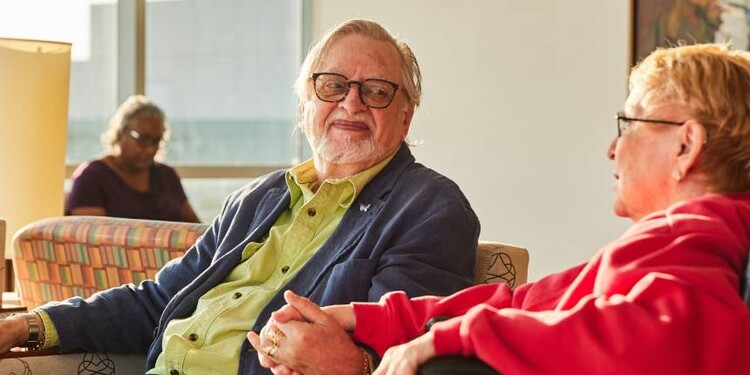
whole.jpgPersonalized medicine extends beyond matching the gene expression to the correct therapy.

“We know that people under stress release hormones that could counteract the benefits of any therapy,” says oncologist Neil Spector, MD. “So taking a whole-person approach to care and helping patients manage the stress in their lives is just good medicine.”

Duke has long offered support groups and counseling for cancer patients and their loved ones, and studies show such approaches can make a measurable difference. In 2006, Kim Lyerly, MD, director of Duke Comprehensive Cancer Center, invited Tina Staley to implement her personalized cancer support program, Pathfinders, at Duke. The goal was to study the program and determine whether it had a positive impact on patients.

The Duke research team led by Amy Abernethy, MD, enrolled 50 patients with metastasized breast cancer. The women met at least monthly and communicated via telephone and e-mail with a “Pathfinder,” a Duke social worker specially trained in the program’s tenets, who helped them identify inner strengths and develop positive coping skills.

The results of the study, presented at the 2009 American Society of Clinical Oncology meeting and recently accepted for publication in Supportive Care in Cancer, showed that the program helped improve distress, despair, and emotional well-being during the initial three months and up to six months after diagnosis.

“Even though the women were getting sicker and experiencing more symptoms related to their cancer,” says Abernethy, “they reported that they felt less emotional distress as a result of being able to better cope with the cancer.”

“This is a structured, personalized model of care that can be measured like any other treatment,” says Staley. “That’s why we spent the time we did to make it evidence-based; otherwise it’s just a lot of classes with no curriculum. This is about social change, not just bringing humanity into the health care system, but proving it works.”

“Some of it isn’t the sexiest, high-science stuff,” says Spector, but care that considers the emotional, mental, and spiritual aspects of a patient’s experience with cancer is going to be an increasing part of the personalized approach.

Duke is even building its new Duke Cancer Center with such considerations in mind; the facility will feature, among other things, a chemotherapy infusion suite that includes an outdoor terrace in addition to indoor and secluded spaces for receiving treatment.

“You can count on one hand the number of institutions that include programs like Pathfinders and integrative medicine as part of their cancer care,” Spector says. “How you treat the whole person is really where I think we’ve made a tremendous leap.”

Contact Us | Careers | Privacy Policy | Make a Gift | Site Map | RSS Feeds | En Español | Mobile Site | Help
Duke Medicine | Duke School of Medicine | Duke Children's | Duke University
Toll-Free: 888-ASK-DUKE (888-275-3853)
Copyright © 2004-2013 Duke University Health System

About This Page

From: DukeMed Magazine (http://www.dukemedicine.org/news_and_publications/publications/dukemed_magazine)
Updated: Dec. 2, 2010
Published: June 18, 2010
URL: http://www.dukehealth.org/health_library/health_articles/a_path_toward_whole_person_care